
Ecommerce photo editing improves product image quality, so they look accurate, professional, and appealing to online shoppers. It directly affects click-through rates, conversion rates, and return rates. Studies show that 75% of online shoppers rely on product photos to make purchase decisions, and poor image quality is one of the top reasons for cart abandonment.
What is Ecommerce Photo Editing?
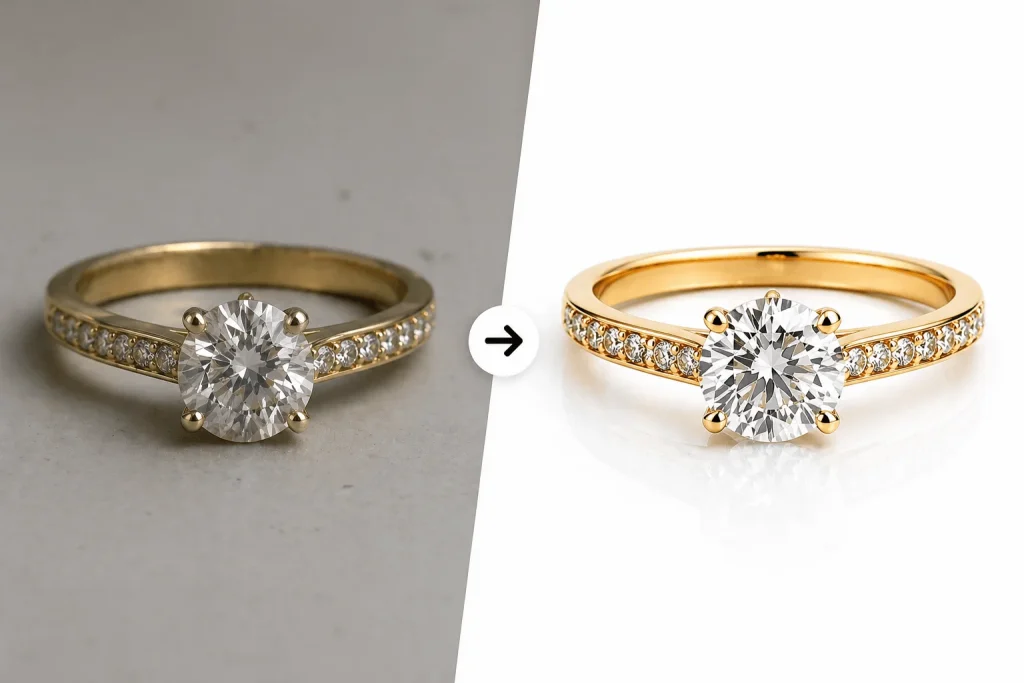
Ecommerce photo editing is the process of professionally enhancing product photographs so they meet platform standards, look accurate to the real product, and convert browsers into buyers.
It includes services like:
- Background removal and replacement
- Color correction and white balance adjustment
- Retouching and cleanup of dust, scratches, and imperfections
- Shadow and reflection creation for natural depth
- Image masking for complex product edges
- Ghost mannequin editing for apparel and clothing
Every major ecommerce platform, including Amazon, Shopify, eBay, and Etsy, has specific image requirements. Professional photo editing ensures your images meet those standards while standing out from competitors.
Why Ecommerce Photo Editing Is Important in 2026
1. Product Photos Are the First Thing Shoppers Judge
Online shoppers cannot touch, smell, or try a product before buying. The photograph is the only sensory input they have. Research by Justuno found that 93% of consumers consider visual appearance the key deciding factor in a purchase decision.
If the image is blurry, poorly lit, or visually inconsistent with other listings, the shopper moves on. Professional editing fixes that before it costs you a sale.
2. High-Quality Images Directly Increase Conversion Rates
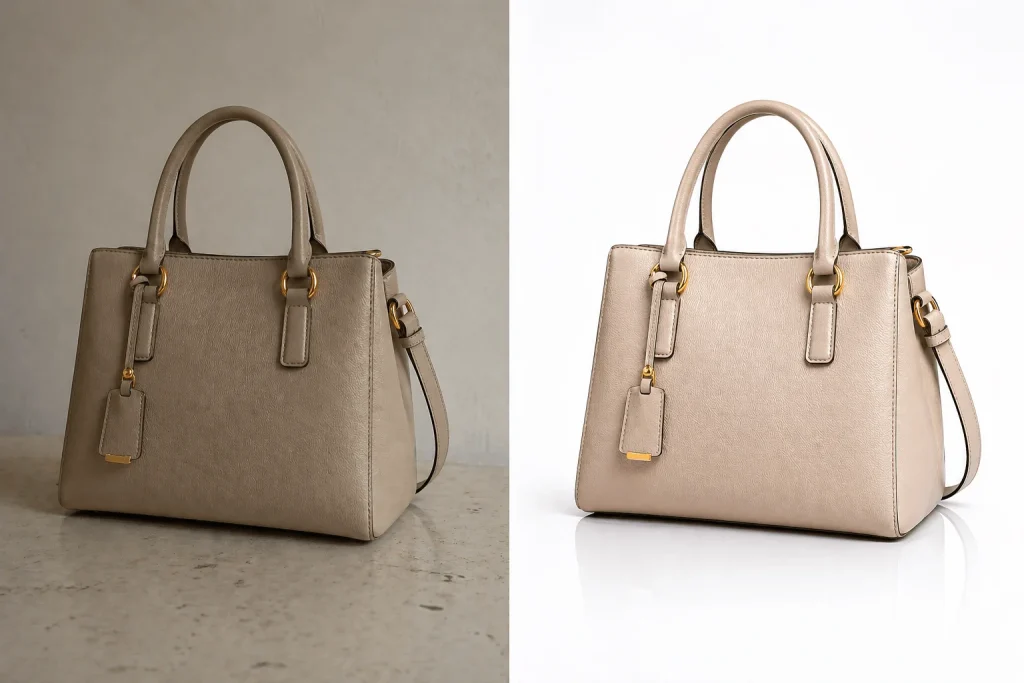
Clean, well-edited product images convert significantly better than unedited ones. A study by MDG Advertising found that product images with high visual quality generate 94% more views than plain or low-quality images.
For ecommerce sellers, this means better-edited images lead to more clicks, more add-to-carts, and more completed purchases without changing anything else about your listing.
3. Accurate Color Reduces Returns
One of the highest hidden costs in ecommerce is product returns. A common reason customers return items is that the product looks different from the photo, often due to inaccurate color.
Professional color correction ensures the product in the photo matches the actual product as closely as possible. This builds customer trust and reduces the return rate, which directly protects your profit margin.
4. Consistent Images Build Brand Trust
When your product images look consistent across your entire catalog, your store appears more professional and trustworthy. Shoppers associate visual consistency with reliability.
Whether you sell 10 products or 10,000, consistent editing style, background, and lighting across every image signals to customers that they are buying from a serious, established business.
5. Platform Compliance Protects Your Listings
Amazon, eBay, and most major marketplaces require product images to meet strict technical standards. These include pure white backgrounds, minimum pixel dimensions, no watermarks, and no promotional text.
Failing to meet these requirements can result in listing removal or suppression in search results. Professional ecommerce photo editing ensures every image is platform-compliant before it goes live.
6. Better Images Improve SEO and Visibility
Search engines, including Google Images and platform-specific search on Amazon and Etsy, factor image quality and relevance into rankings. Properly edited, correctly named, and optimized images help your products appear in more search results.
In 2026, with AI-powered visual search becoming more common on Google and Pinterest, image quality is increasingly tied to organic discoverability.
7. Edited Images Work Harder Across All Channels
A professionally edited product image does not just serve your ecommerce listing. It works across social media, paid ads, email campaigns, and print materials. Clean, well-edited images reduce the need to reshoot for every new channel and give your marketing a consistent, professional look everywhere.
Common Ecommerce Photo Editing Techniques Explained
| Technique | What It Does | Best For |
|---|---|---|
| Background Removal | Removes the original background and replaces it with white or transparent | Amazon, Shopify, eBay listings |
| Color Correction | Adjusts hue, saturation, and white balance for accurate color | All product categories |
| Retouching | Removes dust, lint, scratches, and minor imperfections | Jewelry, apparel, electronics |
| Shadow Creation | Adds a natural drop shadow or reflection below the product | White background shots |
| Ghost Mannequin | Removes mannequin from clothing shots | Fashion and apparel |
| Image Masking | Cuts out complex edges like hair, fur, or glass | Beauty, fashion, glassware |
Manual Editing vs AI Tools: What Works Better in 2026
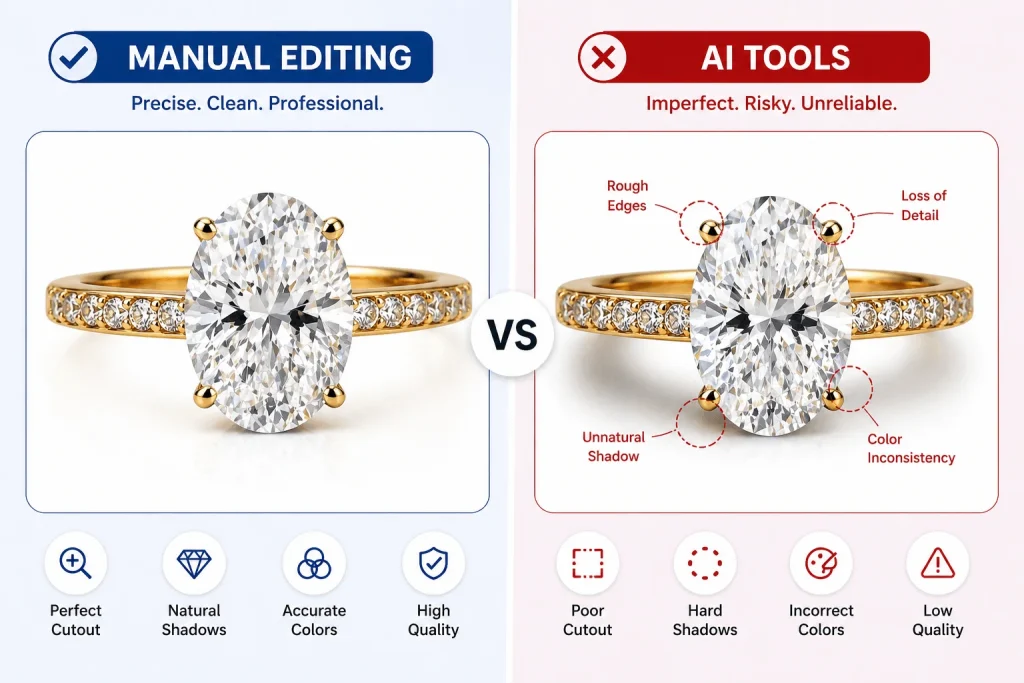
AI photo editing tools have improved significantly. They are fast, affordable, and useful for basic tasks like background removal on simple product shots.
However, AI tools still struggle with:
- Complex product edges like jewelry chains, fabric texture, and transparent objects
- Color accuracy across different lighting conditions
- Retouching that looks natural rather than over-smoothed
- Consistency across large product catalogs with varied backgrounds
For ecommerce sellers who need accurate, platform-ready, consistent images at scale, manual editing by experienced professionals still produces more reliable results than fully automated tools.
How Much Does Ecommerce Photo Editing Cost?
Pricing varies based on the complexity of the edit and the volume of images.
| Edit Level | Price Range | Best For |
|---|---|---|
| Basic | $0.29 per image | Simple background removal |
| Medium | $0.50 per image | Color correction |
| Complex | $1.25 per image | Detailed masking, shadow work |
| Advanced | $2.50 per image | Ghost mannequin |
Bulk orders typically qualify for significant discounts. Most professional services also offer free trial edits so you can assess quality before committing.
Conclusion
In 2026, ecommerce photo editing is not optional. It is a direct input into conversion rate, return rate, platform compliance, brand trust, and search visibility. Sellers who invest in consistent, accurate, professional product images have a measurable advantage over those who do not.
Whether you are launching a new product line, cleaning up an existing catalog, or scaling to thousands of SKUs, professional photo editing is one of the highest-return investments an ecommerce business can make.
Frequently Asked Questions
Because online shoppers rely entirely on product images to make purchase decisions. High-quality, accurate images increase conversion rates, reduce returns, build brand trust, and improve search visibility.
Most professional editing services deliver standard orders within 24 hours. Complex or high-volume orders may take longer depending on the scope.
AI tools work well for simple, high-contrast product shots. For complex edges, accurate color, and consistent large-scale catalogs, manual editing by professionals produces more reliable and platform-ready results.
Basic edits start from around $0.29 per image. More complex work, like ghost mannequin or advanced retouching, typically ranges from $1.25 to $2.50 per image. Bulk orders usually qualify for significant discounts.