
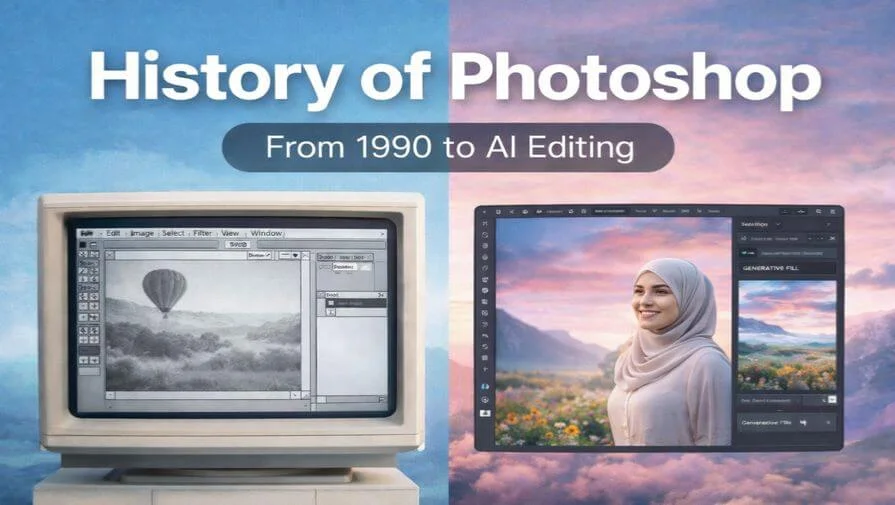
Photoshop began in 1987 when Thomas and John Knoll developed an image display program that later became Adobe Photoshop. First released in 1990, Photoshop revolutionized digital photo editing with layers, non-destructive tools, and advanced retouching features now used across photography, design, and media industries.
From its academic origins as a simple grayscale display program to today’s AI-powered creative platform, Photoshop’s journey reflects the rapid evolution of digital creativity. Over the decades, it has grown from a technical experiment into an essential tool for photographers, designers, businesses, and visual storytellers worldwide.
What Is the History of Photoshop?
The history of Photoshop traces the transformation of a simple grayscale display program into the world’s leading photo editing software. Created by Thomas Knoll and later expanded with his brother John Knoll, Photoshop introduced groundbreaking innovations such as layers, masks, smart objects, and AI-powered editing tools that reshaped digital imaging forever.
The Origin of Photoshop
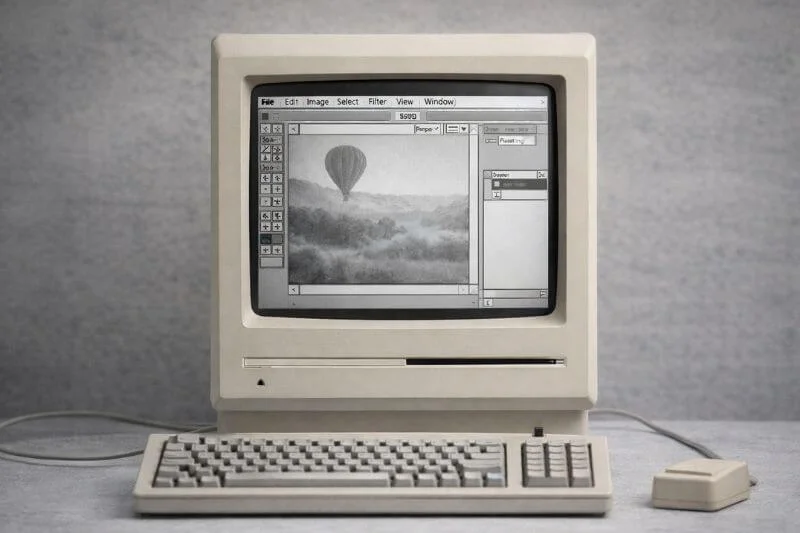
The origin of Photoshop dates back to 1987, when Thomas Knoll, a Ph.D. student at the University of Michigan, created a program called Display to show grayscale images on a monochrome monitor. His brother, John Knoll, who was working in the visual effects industry, quickly recognized its potential for image editing.
John Knoll later worked at Industrial Light & Magic (ILM), the visual effects studio behind Star Wars. His experience in high-end visual effects helped shape Photoshop’s early connection to professional digital imaging and cinematic post-production workflows.
Together, the brothers expanded the software’s capabilities beyond simple image display. They added editing tools, correction features, and workflow improvements that laid the foundation for what would later become Adobe Photoshop. This collaboration marked the true beginning of Photoshop’s journey from a university project to the world’s leading photo editing software.
When Was Photoshop Created?
Photoshop was created in 1987 by Thomas Knoll, with development support from John Knoll. Adobe licensed the software in 1988, and the first official version was released in February 1990.
When Adobe Entered the Picture
In 1988, Adobe licensed the software from the Knoll brothers. This marked a major turning point in Adobe Photoshop history, allowing the company to refine the program and prepare it for commercial release.
The Launch of Photoshop 1.0
The first official version, Photoshop 1.0, launched in February 1990 for Macintosh. It introduced groundbreaking digital editing features that replaced traditional darkroom techniques and marked the first milestone in the Photoshop timeline.
Photoshop Evolution Timeline
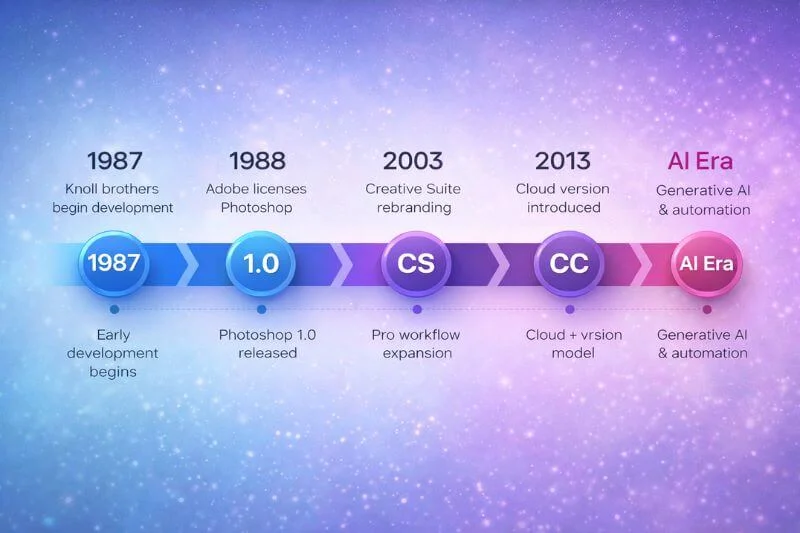
A quick look at the major milestones shows how Photoshop evolved from a university project into an AI-powered creative tool.
- 1987 – Early Development Begins
- 1990 – Photoshop 1.0 Released
- 1994 – Layers Introduced
- 2005 – Smart Objects
- 2010 – Content-Aware Fill
- 2023 – Generative Fill (AI)
The Evolution of Photoshop Versions
Over the years, each new version of Photoshop introduced innovations that reshaped digital image editing. Some releases became true turning points in the history of Photoshop by changing how professionals work.
Major Breakthrough Versions in Photoshop History
Several Photoshop releases introduced groundbreaking features that permanently changed digital photo editing workflows. The following versions represent the most important technological turning points in Photoshop’s evolution.
| Version | Feature Introduced | Why It Mattered |
| 1994 – Photoshop 3.0 | Layers | Layers enabled independent, non-destructive image editing. |
| 1996 – Photoshop 4.0 | Adjustment Layers | Allowed color edits without changing original pixels |
| 2005 – Photoshop CS2 | Smart Objects | Scalable, non-destructive transformations |
| 2010 – Photoshop CS5 | Content-Aware Fill | Automated object removal before AI tools became common |
| 2020+ – CC Versions | Neural Filters | AI-powered retouching and facial adjustments |
| 2023+ | Generative Fill (Adobe Firefly AI) | Text-to-image editing directly inside Photoshop |
Photoshop Before and After Digital Editing
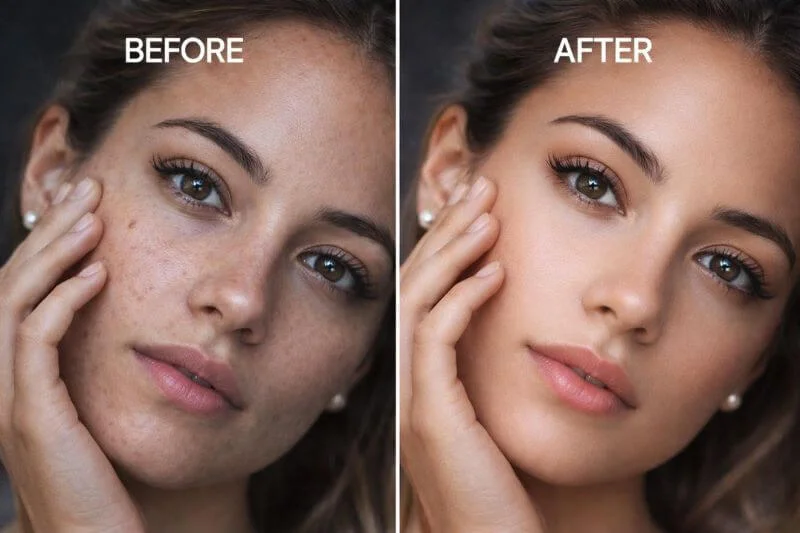
The evolution of Photoshop clearly shows how digital tools replaced slow, manual darkroom techniques with faster, more precise, and scalable editing workflows.
| Before Photoshop | After Photoshop |
| Manual darkroom retouching | Digital non-destructive editing |
| Time-consuming corrections | Fast, precise enhancements |
| Limited creative control | Advanced compositing & effects |
| Expensive workflows | Scalable editing for businesses |
Before Photoshop, photo retouching required physical tools, chemical processes, and hours in a darkroom. Today, the same corrections can be done in minutes with non-destructive layers and smart tools.
This transformation highlights how Photoshop revolutionized global photo editing by making high-quality image enhancement faster, more accessible, and commercially scalable.
How Photoshop Changed Photography
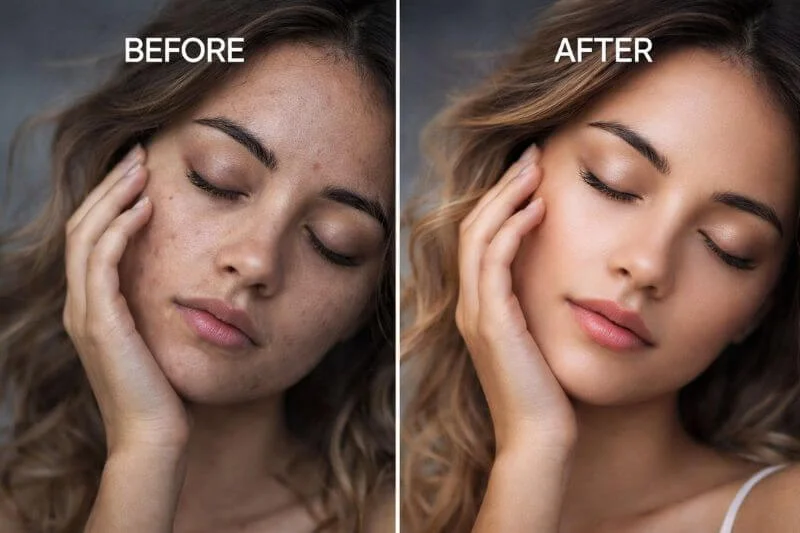
Photoshop’s development is closely tied to the transformation of professional photography. Features like layers, masks, adjustment layers, and smart objects allow editors to enhance images while preserving the original file, making non-destructive editing the industry standard.
Advanced tools such as content-aware fill, dodge and burn, and frequency separation brought high-end retouching techniques beyond traditional darkroom experts, making professional-quality enhancements more accessible.
These innovations reshaped modern photo editing workflows and highlighted the lasting impact of Photoshop on photo editing by increasing precision, flexibility, and creative control.
As Photoshop tools became more powerful, professional editing also became more specialized — which is why many ecommerce brands now rely on expert photo editing services to achieve consistent, high-quality results at scale.
Photoshop’s Impact on Modern Creative Industries
The evolution of Photoshop has reshaped multiple creative industries by improving editing precision, workflow speed, and visual storytelling capabilities.
1. Photography
Photoshop enables professional retouching, color grading, and non-destructive editing techniques that help photographers create polished, high-quality images while preserving original details and maintaining full creative control.
2. Ecommerce
Businesses rely on Photoshop for accurate background removal, image masking, shadow creation, and high-quality visuals across online catalogs, marketplaces, and advertising platforms.
3. Fashion & Beauty
High-end skin retouching, precise lighting refinement, and natural texture preservation make Photoshop an essential tool in professional fashion photography, helping editors create polished, magazine-quality images while maintaining realistic detail.
4. Advertising
Photoshop supports complex image compositing, advanced color grading, and detailed retouching that power creative visual storytelling across marketing campaigns, brand promotions, and advertising media.
5. Social Media
Creators and brands use Photoshop to optimize visuals for engagement through lighting adjustments, color correction, and detail enhancement.
This broad influence highlights the lasting importance of Photoshop in digital media.
Ethical Considerations in Photoshop Use
While the evolution of Photoshop unlocked creative freedom, it also introduced ethical challenges. Over-editing and misleading visuals can distort reality, making responsible use essential.
The Future of Photoshop
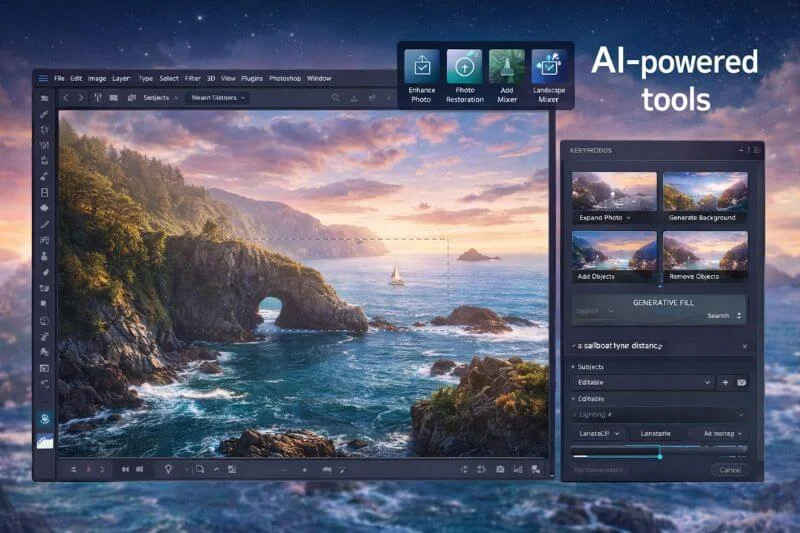
Photoshop’s evolution continues with artificial intelligence, cloud collaboration, and automation. Features like Generative Fill, Neural Filters, and AI-based selections show how Photoshop is moving toward faster, smarter, and more intuitive editing workflows. As visual content becomes more important across industries, Photoshop remains at the center of digital creativity.
Conclusion
The history of Photoshop represents a continuous evolution of innovation, creativity, and digital imaging technology. From its beginnings as a simple grayscale display tool to today’s AI-powered creative platform, Photoshop has not only redefined digital image editing but also shaped the visual standards of modern photography, design, and media.
FAQ: Photoshop’s Development
A: Photoshop was created by Thomas Knoll in 1987, with John Knoll later helping develop it into a full image editing program.
A: Photoshop 1.0 was officially released in February 1990 for Macintosh.
A: The Photoshop evolution includes layers, smart objects, cloud integration, and AI-powered features like Neural Filters.
A: Photoshop remains essential because it combines non-destructive editing, precision tools, and automation to deliver professional-quality image enhancement.
A: Photoshop introduced layers, non-destructive editing, and advanced retouching tools that made digital editing faster, more flexible, and widely accessible.