
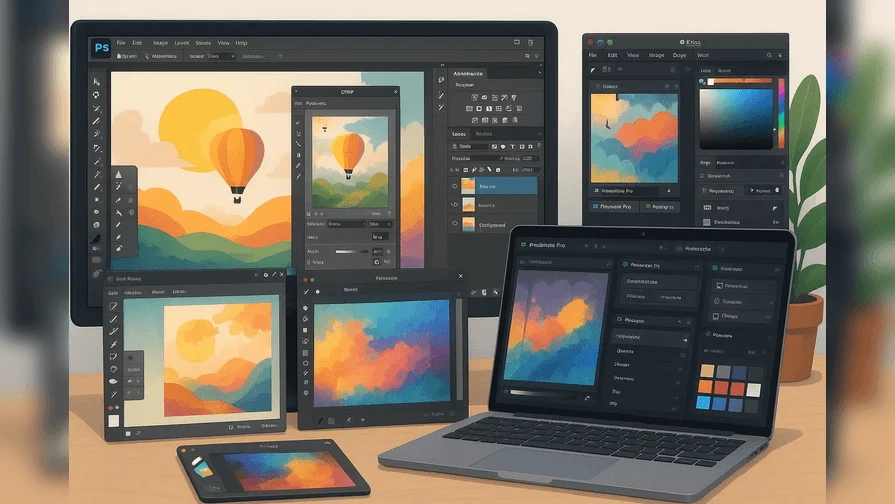
Raster image editing involves modifying pixel-based images such as JPEG, PNG, and PSD files by adjusting color, brightness, sharpness, and fine details at the pixel level. Unlike vector graphics, raster images are made up of tiny colored squares called pixels arranged in a grid.
Raster graphics software gives precise control over image quality and is widely used for photo retouching, background removal, color correction, digital painting, and ecommerce image editing. Because raster images are resolution-dependent, they are ideal for realistic visuals but may lose quality when enlarged beyond their original size.
In this 2026 guide, you’ll learn what raster image editing is, how it works, when to use it, and which raster graphics software tools are best for beginners and professionals.
What Is Raster Image Editing?
Raster image editing is the process of modifying pixel-based images using specialized software. Each raster image is made up of thousands or millions of tiny colored squares called pixels, and editing involves changing those individual pixels directly.
Because raster graphics are resolution-dependent, they are ideal for detailed and realistic visuals such as photographs, scanned artwork, and textured designs. However, enlarging a raster image beyond its original size may cause pixelation and quality loss.
For example, when you remove a background from a product photo or smooth skin in a portrait, you are editing individual pixels — this is raster image editing.
Common Raster Editing Tasks
- Photo retouching
- Background removal
- Skin smoothing and blemish correction
- Color grading
- Image restoration
- Digital painting
Popular raster file formats include JPEG, PNG, TIFF, BMP, GIF, and PSD. In short, raster image editing focuses on pixel-level precision, making it essential for professional photography and detailed visual production.
Is Raster Editing the Same as Bitmap Editing?
Yes. Raster editing and bitmap editing refer to the same concept. Both describe the process of modifying pixel-based images composed of tiny colored squares arranged in a grid. Many bitmap graphics editors are simply raster graphics software tools designed for pixel-based image manipulation.
How Raster Image Editing Works
This process differs from vector editing, which relies on scalable mathematical paths instead of fixed pixels. Raster editing software works by modifying pixel data layer by layer. Each layer contains image information that can be adjusted independently.
Typical raster editing tools include:
- Brush and eraser tools
- Clone stamp tool
- Selection tools
- Adjustment layers
- Filters and effects
- Layer masks
When you adjust brightness or color balance, the software recalculates the pixel values to apply changes accurately. This pixel-level control makes raster editing ideal for high-detail photography and advanced image manipulation.
Raster vs Vector Editing: What’s the Difference?
The key difference between raster and vector editing lies in how images are created and scaled. Raster graphics are made of pixels, while vector graphics are created using mathematical paths.
| Features | Raster Editing | Vector Editing |
|---|---|---|
| Based on | Pixels | Mathematical paths |
| Best for | Photos & realistic images | Logos & scalable graphics |
| Scalability | Loses quality when enlarged | Infinite scaling |
| File Types | JPEG, PNG, PSD | SVG, AI, EPS |
| Common Software | Photoshop, GIMP | Illustrator, Inkscape |
In simple terms, raster editing is best for detailed photo work, while vector editing is ideal for scalable designs like logos and branding.
When to Use Raster Image Editing
Use raster image editing for detailed, pixel-based visuals that require precision and realism. It is best for photographs and high-detail graphics where exact control over pixels matters.
Raster editing is ideal for:
- Editing and enhancing photographs
- Performing detailed photo retouching
- Removing or replacing backgrounds
- Skin smoothing and blemish correction
- Color grading and lighting adjustments
- Creating digital paintings and concept art
- Working with textures and high-detail graphics
- Ecommerce product image editing
Because raster graphics are resolution-dependent, they work best for realistic imagery. Pixel-level control makes raster editing essential for professional photo enhancement and detailed visual work.
Best Raster Graphics Software (Ranked & Reviewed 2026)
From free open-source options to professional-grade tools, this list covers everything you need for raster image editing in 2026.
Raster Graphics Software – At a Glance (2026)
| Software | Platform(s) | Price | Level of Expertise |
|---|---|---|---|
| GIMP | Windows, Mac, Linux | Free | Intermediate to Advanced |
| paint.NET | Windows | Free | Beginner |
| Krita | Windows, Mac, Linux | Free | Intermediate |
| Photopea | Web-based | Free (ads) | Beginner to Intermediate |
| Pixlr X | Web, iOS, Android | Free; $2.49/month | Beginner |
| Artweaver | Windows | Free; €34 Plus | Beginner to Advanced |
| Affinity Photo | Windows, Mac, iPad | $69.99 desktop; $18.49 iPad; $164.99 universal | Intermediate to Advanced |
| Pixelmator Pro | macOS | $49.99 one-time | Intermediate to Advanced |
| Corel Painter | Windows, Mac | $429 full; $199/year | Intermediate to Advanced |
| Adobe Photoshop | Windows, Mac, iPad | $9.99/month | Intermediate to Advanced |
1. GIMP – Best Free Open-Source Tool
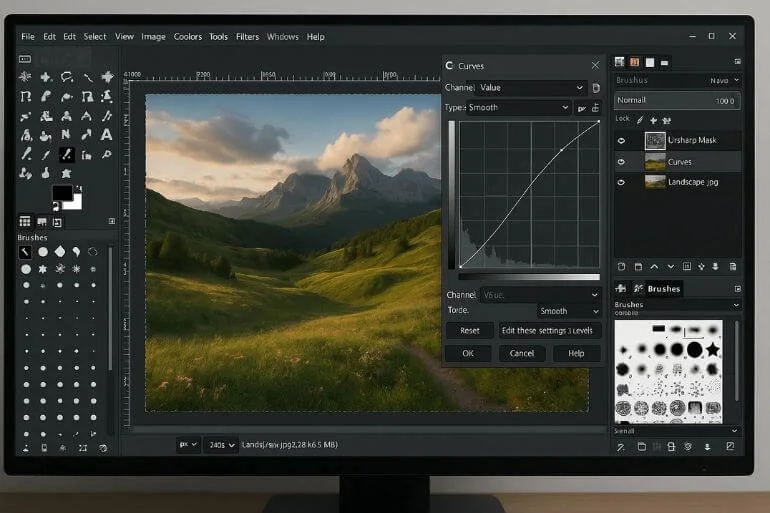
GIMP (GNU Image Manipulation Program) is a free, open-source, and powerful bitmap software ideal for advanced users on a budget. It’s perfect for photo retouching, digital art, and graphic design, supporting layer-based editing, custom brushes, filters, and third-party plugins for maximum creative control. You can download and install GIMP here to start creating immediately.
OS: Windows, Mac, Linux
Price: Free
Pros:
- Full-featured raster editing
- Customizable with plugins
- Regular updates and community support
Cons:
- Steeper learning curve
- UI can feel dated compared to commercial software
2. paint.NET – Best for Beginners
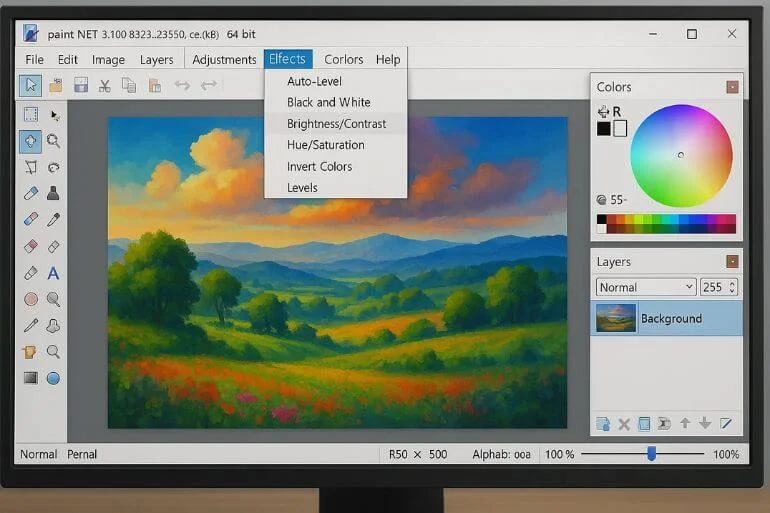
paint.NET is a free raster image editing software for Windows. Designed for new users learning image editing. It offers layer support, basic effects, and an intuitive interface, making it easy to start editing photos or creating simple digital art.
OS: Windows
Price: Free
Pros:
- Easy to use
- Supports layers and effects
- Regular updates
Cons:
- Only available for Windows
- Lacks pro-level features
3. Krita – Free Raster Graphics Editor for Artists

Krita is a free, open-source digital painting application for artists, illustrators, and animators. It offers tools for creating concept art, illustrations, textures, and comics, including advanced brushes, layers, and animation support. With professional features and full color management, Krita is a powerful, cost-free alternative to paid raster graphics software.
OS: Windows, Mac, Linux
Price: Free
Pros:
- Brush engines and stabilizers
- Open-source and regularly updated
- Supports digital animation
Cons:
- Occasional bugs and performance lag
- Less suited for traditional photo editing
4. Photopea – Best Free Photoshop Clone (Online)
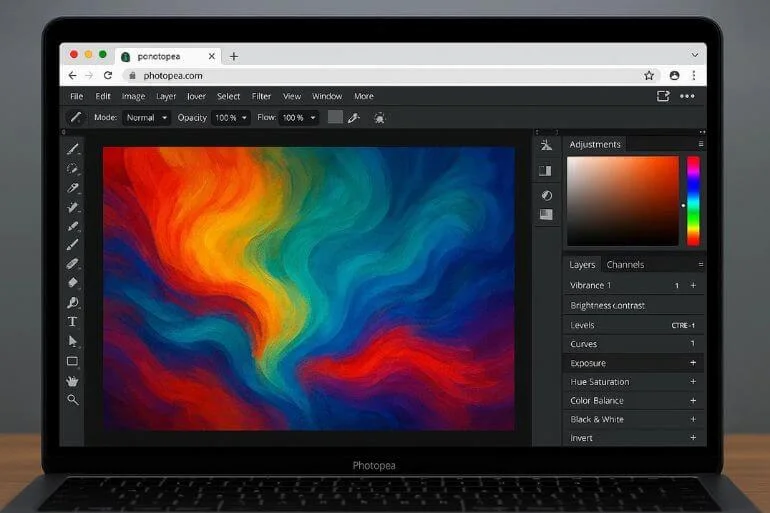
Photopea is a web-based raster graphics editor that runs directly in your browser. It is a free alternative to Photoshop. The software supports PSD, Sketch, and other popular file formats. Many of Photoshop’s features are available without any installation.
OS: Web-based
Price: Free
Pros:
- Works in browser, no installation needed
- Supports PSD, Sketch, and other popular file formats
- Interface similar to Photoshop
Cons:
- Ad-supported in the free version
- Lacks some advanced desktop features
5. Pixlr X / Pixlr Express – Online Raster Graphics Editor
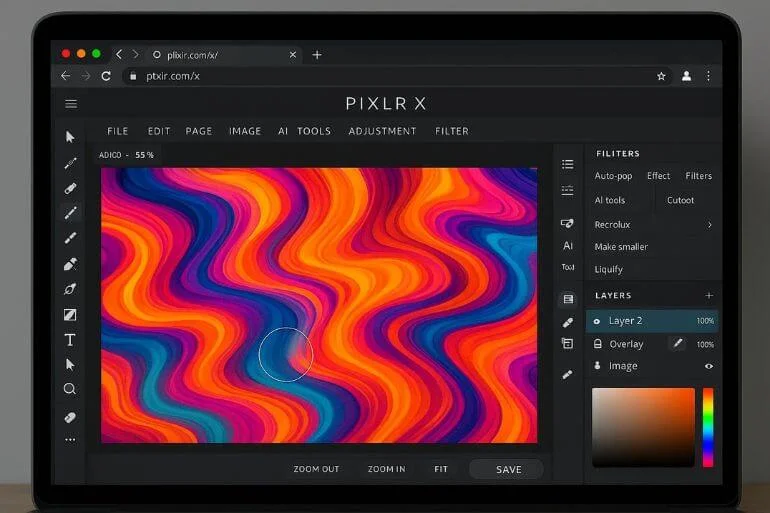
Pixlr X and Pixlr Express are web-based raster graphics editors that work in your browser, as well as on iOS and Android. They are ideal for quick edits, basic photo retouching, and fast creative tasks without installing software.
OS: Web, iOS, Android
Price: Free; paid plans from $2.49/month,$9.99/month, and $11.99/month
Pros:
- Works online with no installation required
- Simple, intuitive interface for fast edits
- Dropbox integration for easy file access
Cons:
- Older versions require Flash
- Limited advanced editing tools
6. Artweaver – Affordable Raster Painting Tool
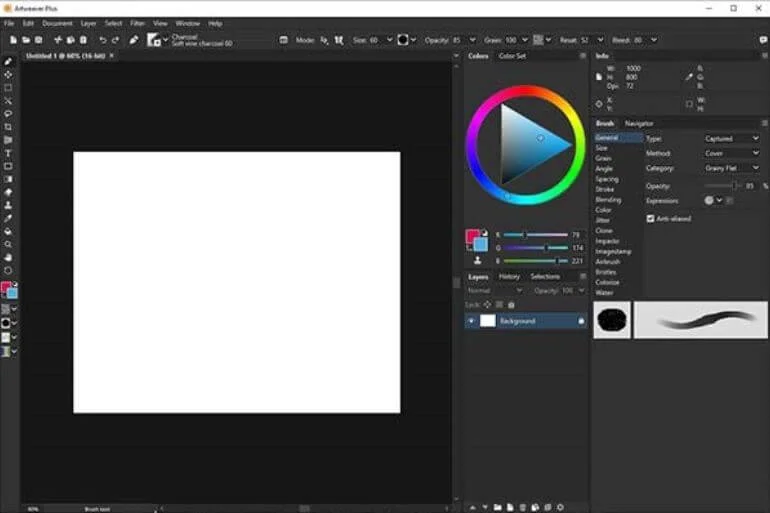
Artweaver is a raster graphics editor for Windows. It is made for hobbyist painters and digital artists. The software has many brush styles, supports PSD files, and allows team collaboration. You can use it to create art alone or with others.
OS: Windows
Price: Free; €34 for Artweaver Plus
Pros:
- Mimics famous painting styles
- Supports PSD files
- Team collaboration feature
Cons:
- Focused mainly on painting
- Windows-only
7. Affinity Photo – Affordable Photoshop Alternative
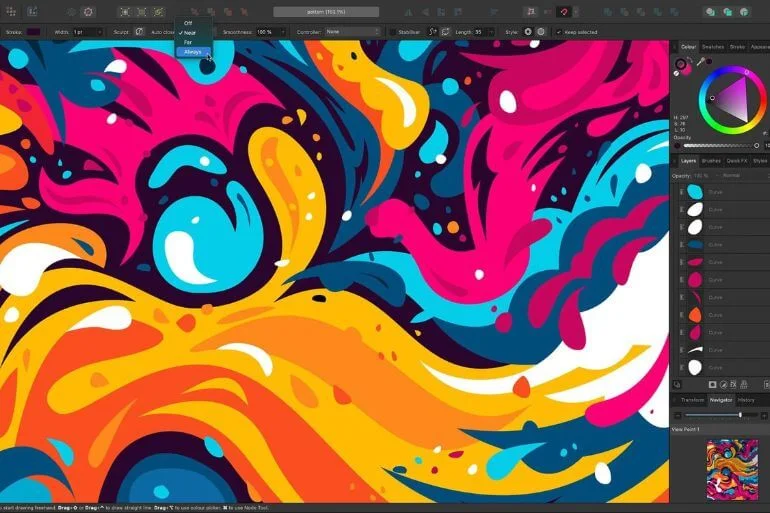
Affinity Photo is a raster graphics editor for Mac, Windows, and iPad. It is perfect for photo editing, retouching, and digital art. The software lets you work with layers, live filters, PSD files, and Photoshop plugins. It offers professional tools at a one-time cost, making it a budget-friendly alternative to Photoshop.
OS: Mac, Windows, iPad
Price: $69.99 (desktop), $18.49 (iPad), $164.99 (universal license)
Pros:
- Professional tools without subscription
- Cross-platform support
- Fast batch processing and 360° image editing
Cons:
- Limited to iPad on mobile
- Some tools can feel sluggish
If you’re specifically interested in improving portraits, you can also check out our guide to the best photo retouching software.
8. Pixelmator Pro – Best for Mac Users
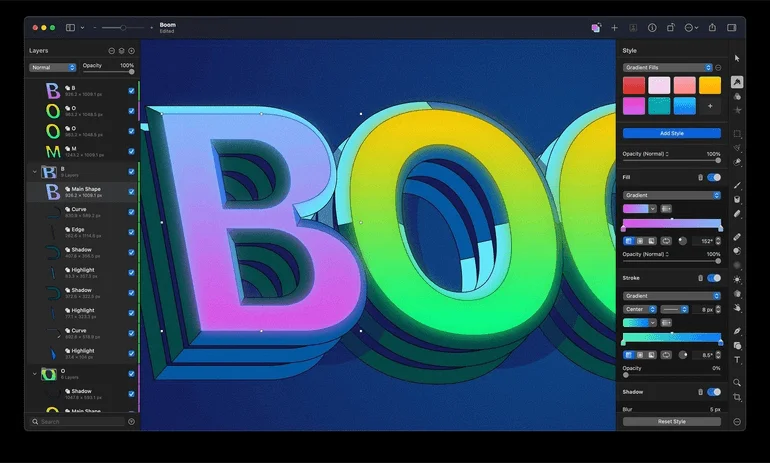
Pixelmator Pro is a raster graphics editor for macOS, designed for Mac-based creatives. It combines photo editing, digital painting, and vector support in a sleek, easy-to-use interface. The software also includes machine learning tools for faster and smarter editing.
OS: macOS
Price: $49.99 (one-time)
Pros:
- Sleek, Mac-optimized interface
- Machine learning-powered tools
- Supports both raster and vector editing
Cons:
- Mac-only
- Smaller user community compared to Photoshop
9. Corel Painter – Best for Digital Painting
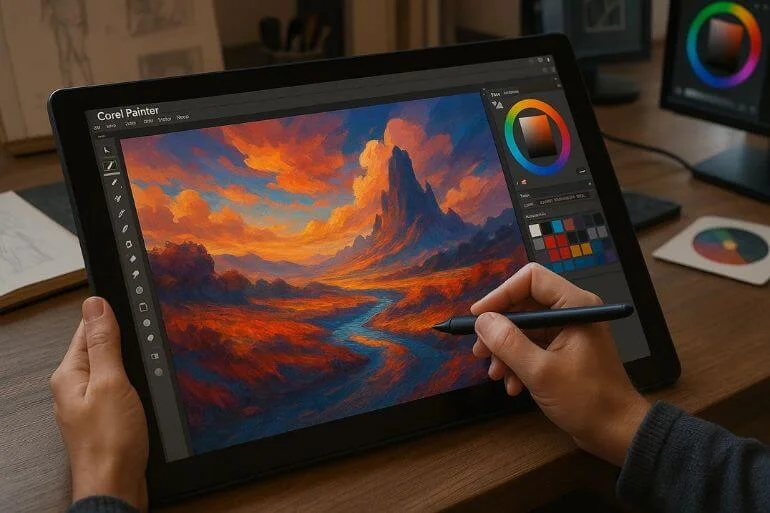
Corel Painter is a raster graphics editor for Windows and Mac. It is made for artists and illustrators. The software has over 900 realistic brushes and works well with a stylus. It also includes advanced color and texture tools. Corel Painter is perfect for digital painting, concept art, and illustrations.
OS: Windows, Mac
Price: $429 (full); $199/year (subscription)
Pros:
- Extensive selection of realistic brushes
- Highly responsive with stylus input
- Advanced color and texture tools
Cons:
- Expensive
- Not suited for photo editing
10. Adobe Photoshop – Industry Standard Software
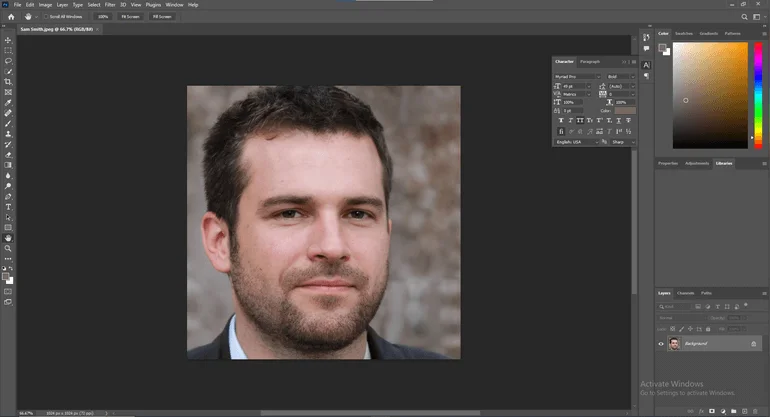
Adobe Photoshop is a raster graphics editor for Windows, Mac, and iPad. It is used by professional photo editors and designers. The software has many editing tools, layers, and cloud sync, making it great for photo retouching, digital art, and design projects. To enhance your editing even further, check out our guide to free Photoshop plugins that can add new effects, filters, and features.
OS: Windows, Mac, iPad
Price: $9.99/month (Photography plan)
Pros:
- Extensive professional toolset
- Cloud sync across devices
- Large library of tutorials and resources
Cons:
- Subscription-based
- Learning curve for beginners
How to Choose the Best Raster Graphics Software
Start by thinking about your skill level. Beginners may prefer paint.NET or GIMP, while intermediate users can try Affinity Photo. Professionals often choose Photoshop for advanced editing. Next, consider what you will use the software for.
If you mainly edit photos, go for Photoshop or GIMP. For digital painting or illustrations, try Krita or Corel Painter. For quick online edits, Pixlr or Photopea work well. Also, decide if you want free or paid software and check which device it works on, such as Windows, Mac, iPad, or web-based platforms.
It’s best to start with free tools to learn the basics, then upgrade to paid software like Affinity Photo or Photoshop as you gain experience.
Who Should Use Raster Image Editing?
Raster editing is ideal for photographers, ecommerce businesses, graphic designers, digital artists, and professional retouchers. If your work involves realistic imagery, color correction, background removal, or detailed photo enhancement, raster image editing is the best choice.
Professional photo editing companies and ecommerce image processing services rely heavily on raster image editing for high-precision results. If your project requires professional design support, explore our graphics design services for high-quality visual creation and image enhancement.
FAQs About Raster Image Editing
Raster image editing software modifies pixel-based images such as photos and digital artwork. Examples include Photoshop, GIMP, Affinity Photo, Krita, and Photopea.
Yes. Adobe Photoshop is a raster graphics editor that primarily works with pixel-based images and is widely used for professional photo editing and digital art.
Raster editing modifies pixels and is best for photographs. Vector editing manipulates mathematical paths and is best for scalable graphics like logos.
No. Raster images are resolution-dependent and may lose quality when enlarged beyond their original size.
Common raster formats include JPEG, PNG, TIFF, BMP, GIF, and PSD.
Conclusion on Raster Graphics Software
The best raster graphics software depends on your skill level, goals, and device. Start with free tools like GIMP or paint.NET, and upgrade to Affinity Photo or Photoshop as you gain experience.
At Clipping World, our graphics design team combines raster editing techniques with creative expertise to deliver high-quality visual results.