
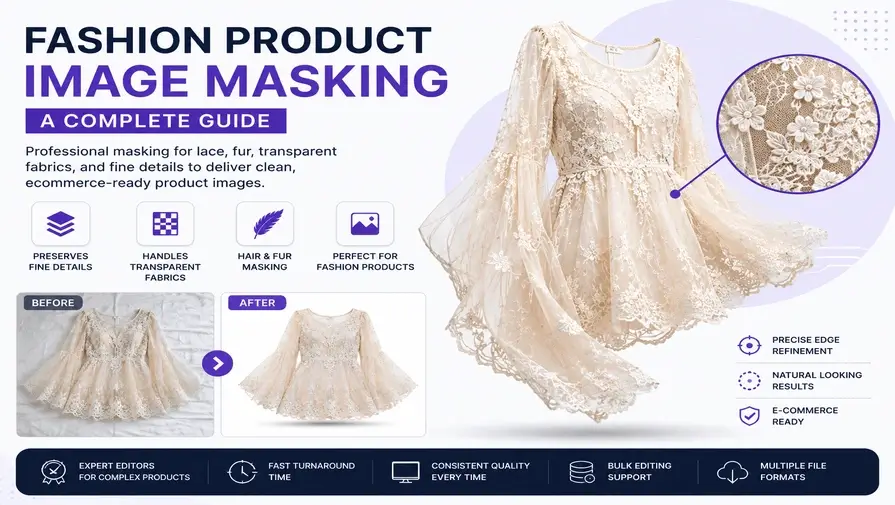
Fashion product photography demands more precision than most other ecommerce categories. Every fold, stitch, and texture matters. Flowing fabrics, delicate lace, transparent materials, and fine hair edges all need careful handling. This is why brands, retailers, photographers, and ecommerce businesses rely on fashion product image masking to showcase their products with flawless, high-quality visuals.
Image masking is a photo editing technique used to isolate complex objects from their backgrounds while preserving every detail. Unlike standard background removal, image masking keeps soft edges, thin fabrics, fur, feathers, veils, and fine hair looking natural. This level of accuracy shapes customer trust and influences purchasing decisions in the fashion industry.
Skilled editors refine each photo to produce clean cutouts, smooth edges, and realistic results. Whether the goal is background replacement, a plain white background for marketplaces, or a creative marketing visual, fashion product image masking helps every image meet professional ecommerce standards.
What Is Fashion Product Image Masking?
Fashion product image masking is a photo editing technique used to separate clothing, accessories, and other fashion items from their backgrounds while preserving fine details and natural edges. Instead of a hard cutout, masking builds a soft, pixel-level transition around complex shapes. This keeps hair strands, lace patterns, and sheer fabric looking true to life once the background is removed or replaced.
How Fashion Product Image Masking Works
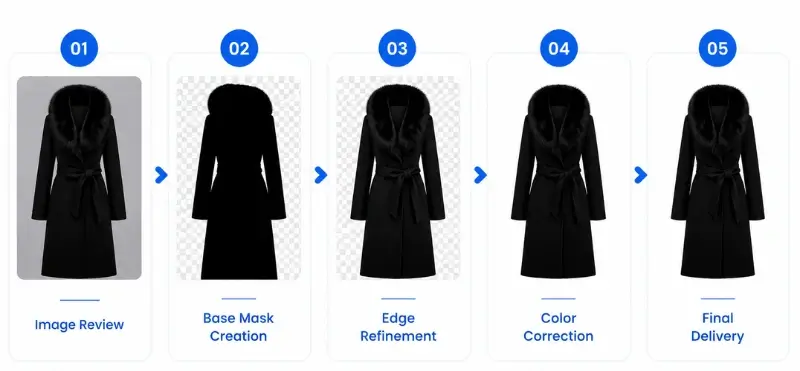
The masking process follows a consistent workflow, though the amount of manual work depends on the garment’s edges and materials.
Image Review and Channel Selection
The editor studies the photo to identify which parts need a hard edge and which parts need a soft, gradual transition, such as hair, fur, or sheer fabric.
Creating the Base Mask
A layer mask or alpha channel mask is built around the garment. This separates the product from the background at a pixel level instead of a simple vector outline.
Refining the Edges
Fine details like loose threads, lace patterns, and stray hair strands are cleaned up by hand, so the transition looks natural against any new background.
Color and Tone Correction
The editor adjusts color balance and contrast so the garment looks accurate once placed on a white background or a different scene.
Quality Check and Delivery
The final image is checked for leftover background pixels, halos, or rough edges before it gets delivered in the requested file format.
Types of Fashion Product Image Masking
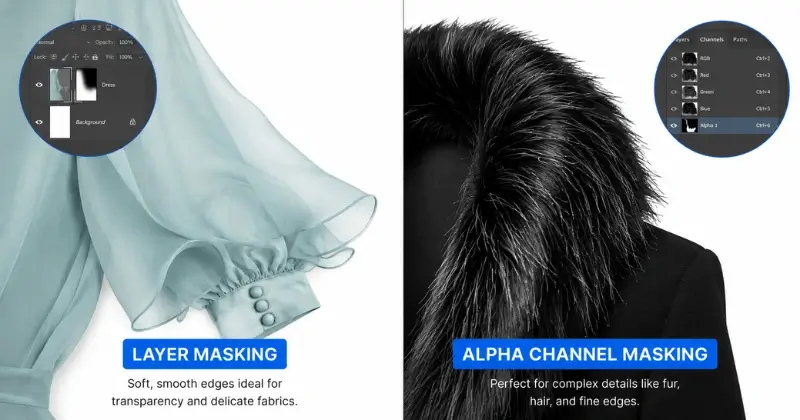
Different garments and materials call for different masking methods. Most fashion editing projects use one or a combination of the following.
Layer Masking
Works well for garments with soft or semi-transparent edges, such as chiffon dresses or sheer sleeves. It lets an editor blend the product into a new background without harsh lines.
Alpha Channel Masking
The most common technique for hair, fur, and fine strands. It uses grayscale values to control exactly how transparent each part of the edge should be, which keeps fur collars and loose hair looking real.
Clipping Mask
Best suited for garments with flat, geometric shapes, like folded t-shirts or structured bags, where a simpler path already gives a clean result.
Collage Masking
Used when a single photo needs multiple elements combined, such as placing a masked garment onto a new lifestyle background or arranging several products into one catalog image.
For most fashion products, alpha channel masking and layer masking do the heavy lifting, since fashion photography deals with fabric, hair, and transparency far more often than flat geometric shapes.
Why Fashion Ecommerce Brands Rely on Image Masking
In online fashion, product photos carry the full weight of the buying decision. Shoppers cannot touch or try on an item, so they judge quality and fit almost entirely through images. Clean, well-masked photos help brands present products in the best possible light and build confidence before checkout.
Image masking works especially well for items with tricky edges. Lace dresses, transparent fabrics, fur-lined jackets, veils, and detailed accessories all fall into this category. A precise cutout keeps these products looking polished and ready for any ecommerce platform.
Masked images can sit on pure white or black backgrounds, custom promotional scenes, or lifestyle settings without losing their natural look. This consistency across a product catalog makes an online store feel more trustworthy and professional.
Fashion Products That Benefit From Image Masking
Fashion items vary widely in shape, material, and finish, so each product category needs a slightly different editing approach. Below are the types of garments and accessories that typically require masking rather than a simple clipping path.
Dresses and Gowns
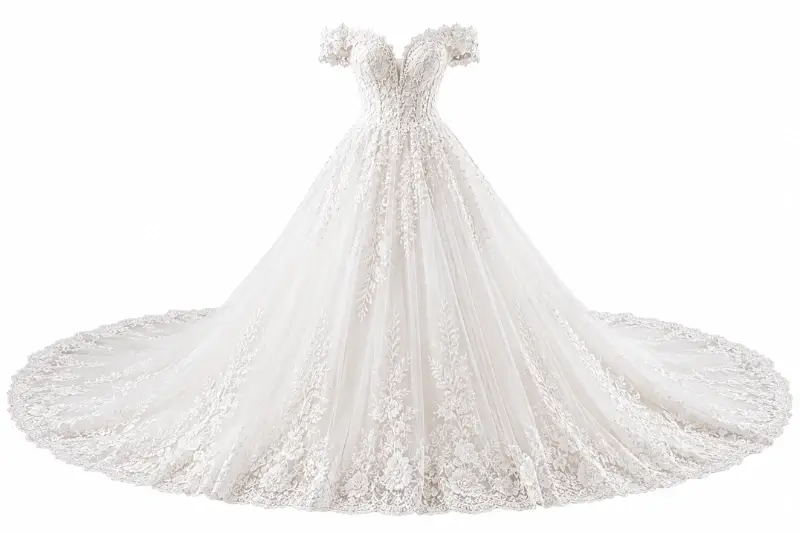
Lace, embroidery, and beading need careful separation from the background so every detail stays intact. Smooth edges and natural cutouts help bridal shops, designers, and fashion retailers present collections at their best.
T-Shirts and Casual Wear
Everyday garments still need clean, consistent photos for catalogs and online stores. Masking removes background distractions while keeping the original shape, texture, and color true to the product.
Jackets and Coats
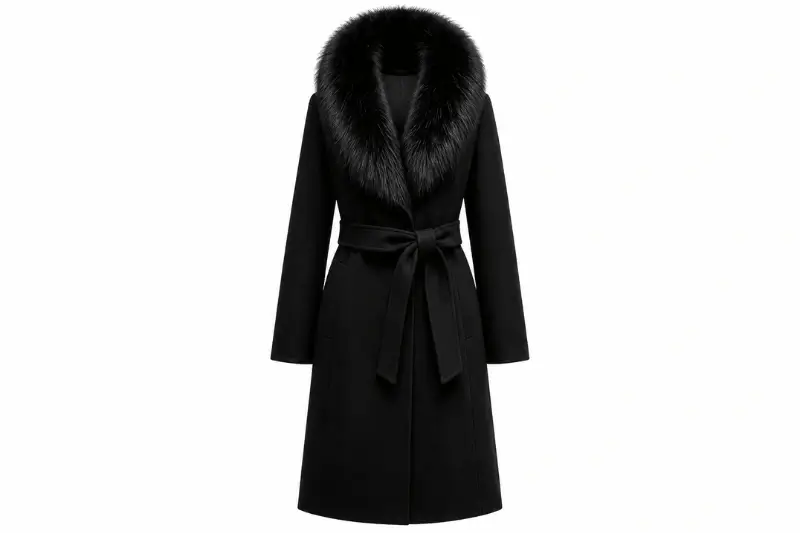
Fur collars, zippers, buttons, and hoods add texture that needs protecting during editing. A careful cutout keeps winter coats, leather jackets, and outerwear looking sharp across marketing and ecommerce channels.
Denim and Jeans
Stitching patterns and fabric texture define denim quality, so masking has to preserve every design element. This helps customers appreciate the craftsmanship behind the fit and style.
Sportswear and Activewear
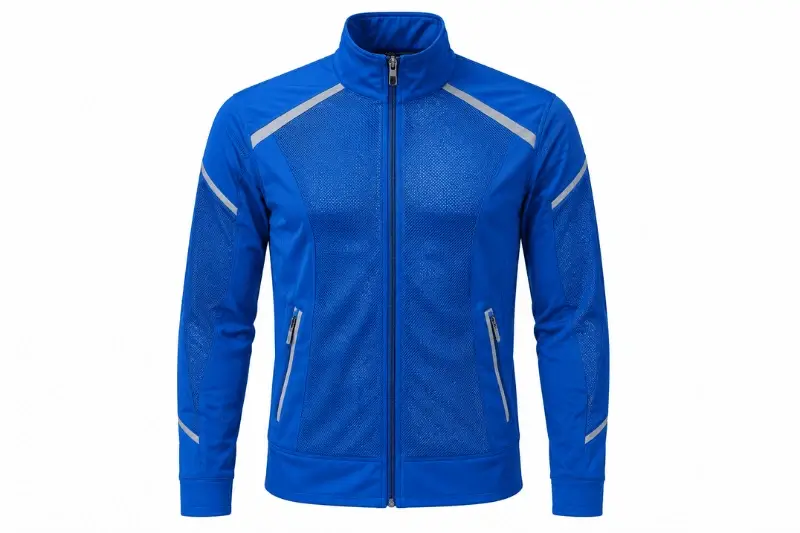
Stretch fabrics, mesh panels, and reflective details are common in performance wear. Clean masking highlights these features so customers can judge quality before buying.
Lingerie and Swimwear
Soft straps, lace trim, and sheer fabric all call for a delicate touch. Masking keeps these details realistic while presenting the product professionally for online stores and ad campaigns.
Fashion Accessories
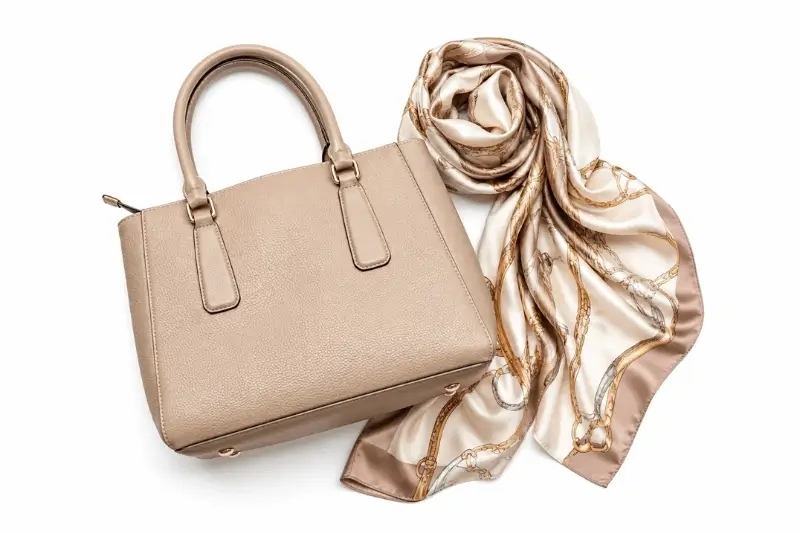
Handbags, belts, scarves, hats, jewelry, and sunglasses all have strong demand in the global market. Isolating each accessory while preserving texture and shape helps brands create images that grab attention on any platform.
Luxury Fashion Products
High-end clothing, premium handbags, and exclusive accessories need exceptional attention to detail. Careful masking keeps every texture and material true to the original, supporting the brand reputation that luxury shoppers expect.
How to Prepare Fashion Photos Before Masking
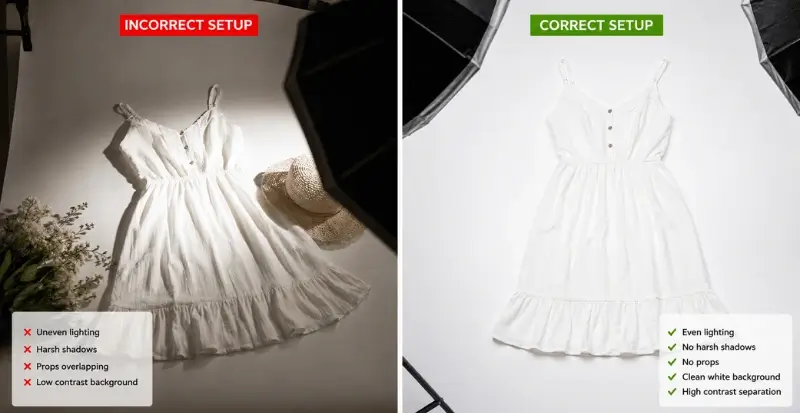
A clean original photo makes the masking process faster and the final cutout sharper. A few adjustments during the photoshoot can save significant rework later.
Use a Plain Background
A solid white, grey, or light blue background separates the garment from its surroundings and makes edge detection far easier.
Keep Lighting Even
Uneven lighting creates shadows along seams and folds that can be mistaken for part of the garment’s edge during masking.
Choose the Right Setup
Flat-lay or mannequin system works well for structured pieces like t-shirts, denim, and folded knitwear, where the shape holds without support.
Remove Extra Props
A scarf draped over a jacket or jewelry layered on a dress adds extra edges that the editor has to separate individually.
Shoot in High Resolution
Both marketplaces and customers zoom in on product photos. Low-resolution images lose fine detail, like stitching or lace patterns.
Common Challenges in Fashion Product Photography
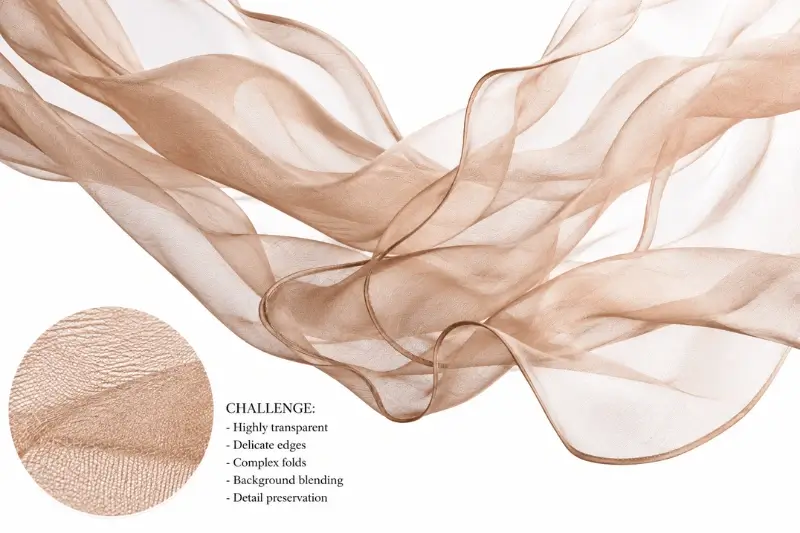
Fashion photography looks simple but is genuinely difficult to get right. Small details, varied textures, and complex shapes create real editing challenges. Left unaddressed, these issues can make products look less appealing to potential buyers.
- Complex edges: Lace, embroidery, and patterns are difficult to separate cleanly.
- Hair and fur: Fine strands require precise masking to look natural.
- Transparent fabrics: Mesh and chiffon are challenging because they’re semi-transparent.
- Fabric folds: Wrinkles and folds can reduce the product’s visual appeal.
- Shadows and lighting: Uneven lighting creates unwanted shadows and highlights.
- Color accuracy: Colors must match the real product to build buyer trust.
- Background distractions: Unwanted objects take attention away from the product.
- Reflective materials: Shiny fabrics and accessories are difficult to edit accurately.
- Fine details: Stitching, buttons, and textures must remain sharp.
- Catalog consistency: Every product image should have a uniform look and style.
Why Fashion Brands Need Image Masking
Clean, well-edited product photos build trust with online shoppers and make a catalog look professional at scale. Here is why fashion brands invest in image masking.
- Creates clean, professional product pictures
- Preserves fine details like lace, fur, and fabric texture
- Maintains a natural look for transparent or semi-transparent materials
- Removes busy backgrounds and keeps focus on the product
- Refines the overall look of ecommerce stores and catalogs
- Builds a consistent style across every product photo
- Increases customer confidence by presenting products clearly
- Helps products stand out in competitive marketplaces
- Reduces returns caused by unclear or misleading photos
Fashion Image Masking vs Clipping Path
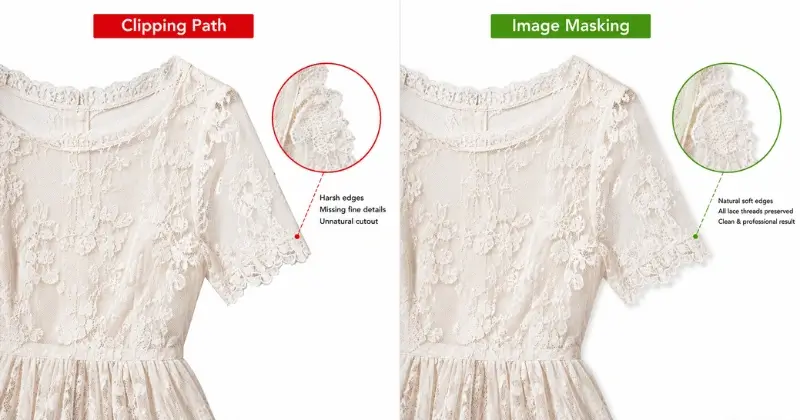
Not sure whether you need image masking or a clipping path? The right choice depends on your product. Clipping path is ideal for simple shapes, while image masking is the better option for soft, detailed, or transparent edges.
| Feature | Clipping Path | Image Masking |
|---|---|---|
| Best For | Simple products | Complex products |
| Edges | Hard & clean | Soft & natural |
| Transparency | No | Yes |
| Hair & Fur | No | Yes |
| Editing | Pen Tool | Masking |
| Speed | Faster | Slower |
| Result | Good for simple edges | Best for fine details |
| Cost | Lower | Higher |
Both techniques remove backgrounds from fashion product photos, but they solve different problems. The right choice depends on how complex the product’s edges are.
When Clipping Path is Enough
Clipping path suits products with smooth, well-defined edges, such as shoes, handbags, belts, and folded clothing. It produces clean cutouts quickly and works well for straightforward ecommerce shots.
When Image Masking Is the Better Choice
Image masking is the stronger option for garments with fur, lace, hair masking or transparent fabric. It also handles mesh materials and intricate patterns better than a standard clipping path.
Comparing Accuracy and Complexity
Image masking gives precise results on fur, lace, and see-through materials. Clipping path remains the faster, more efficient option for simple shapes with clean lines. Choosing between them comes down to how detailed the product actually is.
What Affects the Cost of Fashion Product Image Masking
Pricing for fashion product image masking is not a single fixed rate. A few factors usually decide the final cost per image.
- Edge Complexity: Complex edges take longer to edit than simple shapes.
- Hair & Fur: Fine hair and fur need careful manual editing.
- Transparency: Sheer fabrics require more precise masking.
- Turnaround Time: Rush orders usually cost more than standard delivery.
- Order Volume: Larger orders often receive better per-image pricing.
Because pricing depends on these variables, most editing providers quote fashion image masking per image after reviewing a sample batch rather than offering one flat rate for every garment type.
Before and After: What Changes During Masking
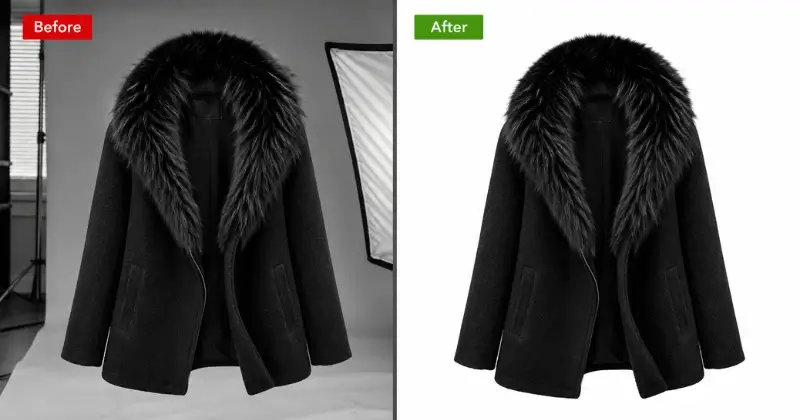
A masked fashion photo usually shows three clear improvements compared to the original shot.
- Background: Replaced with a clean white, transparent, or custom background.
- Edges: Hair, lace, and fine details look smooth and natural.
- Overall Look: Better lighting, color, and consistency across the product catalog.
Frequently Asked Questions
Image masking helps fashion ecommerce brands produce high-quality product photos that attract customers and build trust. It removes distracting backgrounds while keeping essential product details intact, which improves the shopping experience and supports stronger sales performance.
Yes, expert masking techniques preserve the natural transparency and texture of sheer and semi-transparent fabrics while separating them cleanly from the background.
Yes, hair and fur masking is a standard part of fashion and model photography editing. Editors keep every strand and texture intact while removing the background around it.
Most fashion image editing workflows accept JPEG, JPG, PNG, TIFF, PSD, RAW, and other common formats from professional cameras or ecommerce platforms.
Yes, experienced editing teams can handle hundreds or thousands of images while keeping quality and style consistent across the entire catalog.
Conclusion
Fashion product photography brings challenges that standard editing cannot always solve, from sheer fabrics to fine hair strands. If your product photos need this level of precision, explore our Image Masking Service for consistent, marketplace-ready results at scale.
