
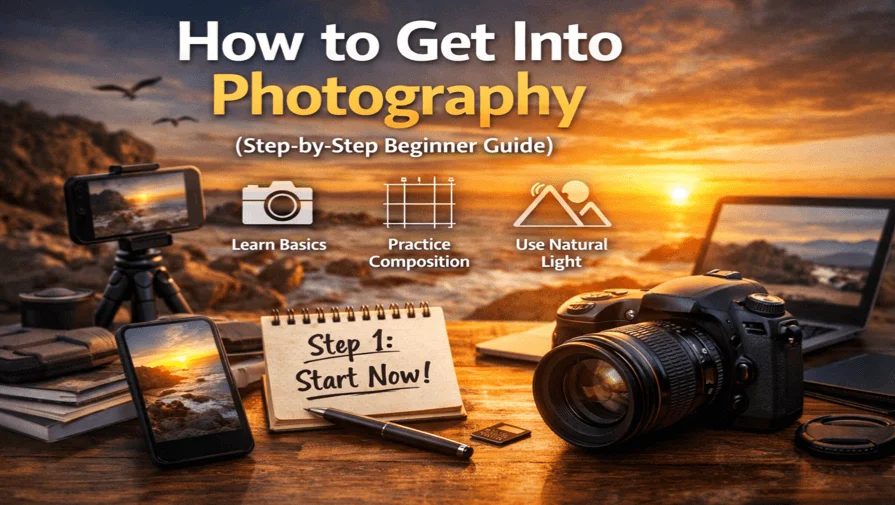
Getting into photography can feel confusing at first. Many beginners think they need an expensive camera or professional skills to get started—but that’s not true. You can start today with just your phone and a basic understanding of lighting, composition, and camera settings.
If you’re looking for beginner photography tips or want to learn step by step, this guide will walk you through everything from scratch. By the end of this guide, you’ll have a clear roadmap to start your journey and take better photos—even if you have zero experience.
How to Get Into Photography (Quick Answer)
To get started as a beginner, follow these steps:
- Start with a smartphone or beginner camera
- Learn the basics (ISO, shutter speed, aperture)
- Practice composition techniques like the rule of thirds
- Use natural lighting for better photos
- Take photos regularly to improve skills
- Learn basic photo editing
What Is Photography? (Simple Definition)
Photography is the art of capturing light using a camera to create images. Getting into it means learning the basics like camera settings, composition, lighting, and editing—then practicing regularly to improve your skills.
Beginner Photography Roadmap
If you want to learn step by step, this simple roadmap will help you understand the key stages every beginner should follow.
| Step | What to Do |
|---|---|
| 1 | Start with a phone or a camera |
| 2 | Learn exposure basics |
| 3 | Practice composition |
| 4 | Understand lighting |
| 5 | Edit your photos |
Step-by-Step: How to Get Into Photography
Many professional photographers started with basic equipment and improved through consistent practice. If you want to learn photography step by step, follow these practical steps that every beginner can apply right away.
Step 1 – Start With What You Have
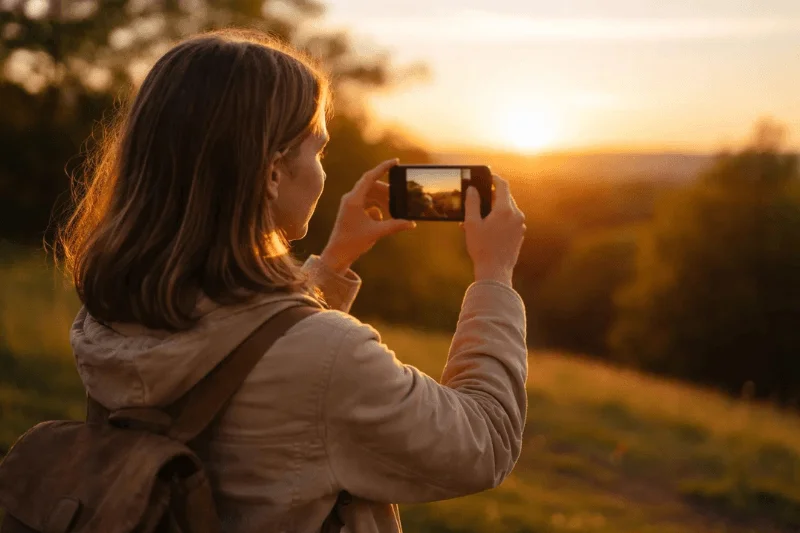
One of the most important beginner photography tips is to start with the gear you already have instead of waiting for the perfect camera.
👉 You can start with:
- Your smartphone
- A basic DSLR
- A mirrorless camera
Modern smartphones are powerful enough to learn photography basics like:
- Composition
- Lighting
- Framing
👉 Skill matters more than gear.
Step 2 – Learn the Basic Camera Settings
To improve quickly, you need to understand the core photography basics, also known as the exposure triangle. You can learn more about it from Photography Life.
- ISO – controls brightness
- Shutter speed – controls motion
- Aperture – controls background blur
👉 You don’t need to master everything instantly—just understand how each setting affects your photo.
Step 3 – Understand Composition
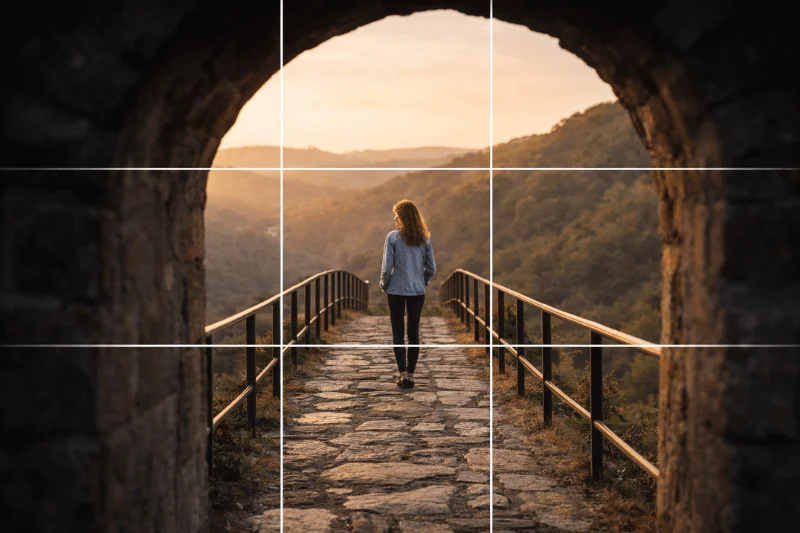
Composition is one of the most important beginner photography tips for creating professional-looking images.
Start with these basic techniques:
- Rule of thirds
- Leading lines
- Framing
- Symmetry
👉 Good composition can make even a simple photo look amazing.
Step 4 – Learn Lighting (This Changes Everything)
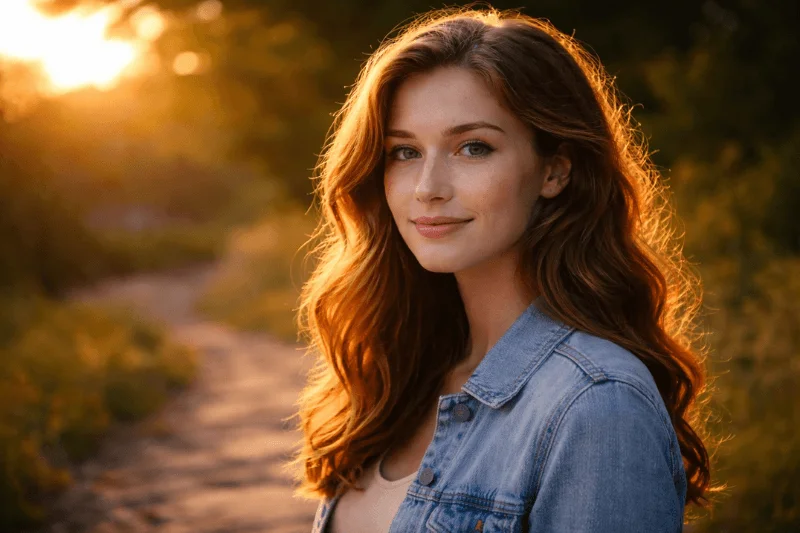
Photography is all about light. Understanding lighting will instantly improve your photos.
Focus on:
- Natural light (best for beginners)
- Golden hour (soft, warm light)
- Avoiding harsh midday sunlight
👉 Lighting can make or break your photo.
Step 5 – Practice Consistently
The best way to learn step by step is through regular practice.
Try this:
- Take photos every day
- Shoot the same subject in different ways
- Experiment with angles and perspectives
👉 Consistency is the fastest way to improve your photography skills.
Step 6 – Experiment With Different Styles
As you improve, try different types of photography to find your interest:
- Portraits
- Product shoots
- Nature shots
- Indoor photography
👉 This helps you discover your style and direction.
Essential Photography Gear for Beginners
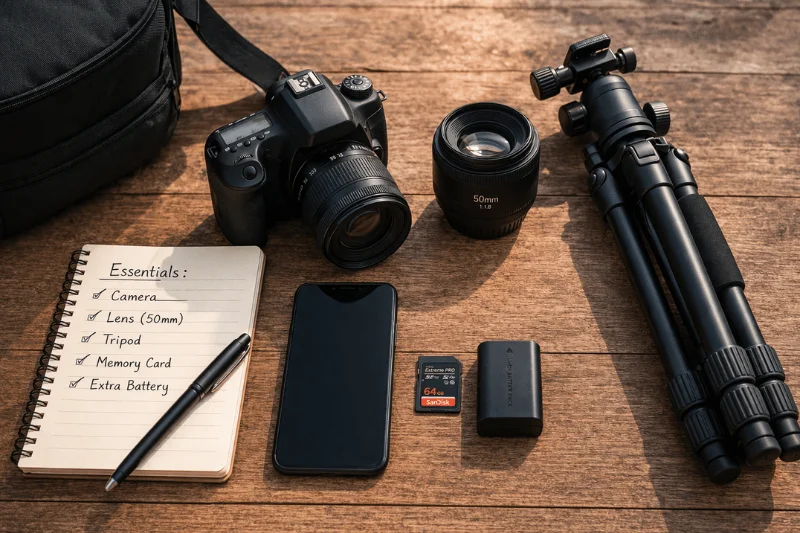
If you’re just starting out, you don’t need expensive equipment. Focus on a few basic tools that help you learn photography basics and improve your skills step by step.
Basic Gear You Actually Need
Keep your setup simple with these essentials:
- Camera or smartphone – Great photos can be taken with both
- One basic lens (like 50mm) – Ideal for portraits and everyday shots
- Tripod – Helps you avoid blurry photos and shoot in low light
- Memory card – Stores your photos safely
👉 You don’t need expensive gear to start photography—skills matter more.
Optional Gear (Upgrade Later)
As you improve your skills, you can upgrade your setup with additional tools that help you take better photos and work more efficiently.
- External lighting (ring light or softbox) – improves lighting in indoor shoots
- Extra lenses – useful for different photography styles
- Camera bag – protects your gear and makes it easy to carry
- Editing software or professional photo editing services – helps you achieve high-quality results, especially for ecommerce and product photography
Start with the basics and upgrade your gear gradually as your skills improve—your creativity matters more than the equipment you use.
Why Photo Editing Is Important
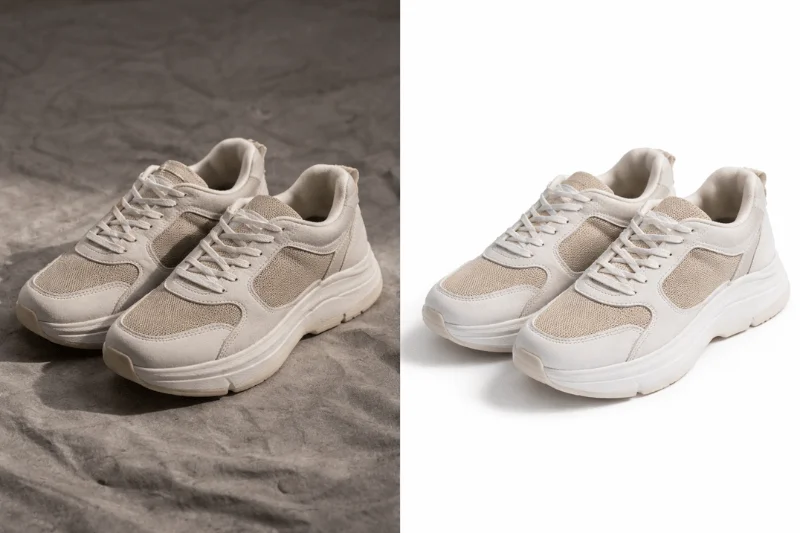
Great photos are rarely perfect straight out of the camera. Editing helps you improve image quality and create more professional results.
Editing helps you:
- Fix lighting and exposure
- Adjust colors
- Remove distractions
- Enhance details
This is especially important in product photography and ecommerce. If you want high-quality results without spending hours editing, professional product photo editing services can help you save time and maintain consistency.
Can You Make Money From Photography?
Yes, you can make money from photography, even as a beginner. Once you learn the basics and practice consistently, there are several ways to start earning.
Here are some beginner-friendly options:
- Product photography – High demand in ecommerce businesses
- Event shoots – Weddings, parties, and corporate events
- Freelancing – Work with clients online or locally
- Stock photos – Sell your photos on stock websites
Many beginners start small and grow their income over time. As your skills improve, combining good shooting techniques with proper editing can significantly increase the quality and value of your work.
Common Beginner Mistakes to Avoid
When learning photography, beginners often make a few common mistakes that slow down their progress. Avoiding these can help you improve faster.
Here are the most common beginner mistakes:
- Buying expensive gear too early – Start simple and upgrade later
- Not practicing regularly – Practice is the key to improvement
- Ignoring lighting – Good lighting is more important than gear
- Over-editing photos – Keep your edits natural and balanced
Avoid these mistakes and focus on learning photography step by step. The more you practice and learn from your mistakes, the faster you’ll improve your skills.
Beginner Photography Tips (Quick Wins)
If you want to improve faster, these beginner tips can make a big difference right away.
- Shoot in natural light whenever possible
- Keep your camera steady to avoid blur
- Focus on one subject at a time
- Avoid using too much Zoom
- Clean your lens regularly for sharper photos
👉 These simple tips can significantly improve your photos, even if you’re just starting out. Apply them consistently, and you’ll see faster improvement.
Final Thoughts
Getting into photography isn’t about having the best camera—it’s about starting with what you have and improving step by step. Focus on learning the basics, practicing regularly, and experimenting with different styles. Over time, your skills will naturally improve.
👉 Remember, consistency matters more than perfection.
Start today, keep learning, and enjoy the process of capturing your world through photography. The sooner you start, the faster you’ll grow as a photographer.
Frequently Asked Questions (FAQs)
No, you don’t need a camera to get started. A smartphone is enough for beginners to learn basics like composition, lighting, and framing.
You can learn the basics in a few weeks, but becoming highly skilled takes continuous practice and experience over time.
No, it doesn’t have to be expensive. You can start with a smartphone and upgrade your gear gradually as your skills improve.
Yes, many photographers are self-taught. With online tutorials, practice, and consistency, you can learn step by step on your own.
The best way to improve your skills is to practice regularly, learn the basics, experiment with different styles, and review your photos.