
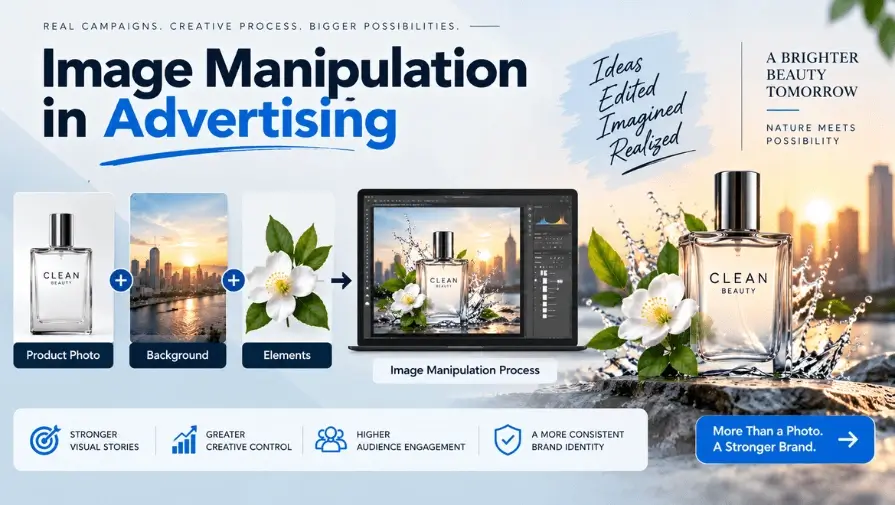
Image manipulation in advertising means changing photos for commercial purposes. It can improve, combine, or transform visual elements. Advertisers use it to create stronger and more memorable visuals. Common edits include background changes, object removal, and color adjustments.
Editors can also combine several photos into one scene. Some projects create visuals that cameras cannot capture naturally. The goal is not simply to make photos look better. Good manipulation helps communicate a clear brand message. However, misleading edits can affect consumer trust.
In this guide, we explore real advertising and media examples. We explain how famous campaigns used image manipulation creatively. We also cover the creative process, common techniques, AI-assisted editing, and ethical considerations.
What Is Image Manipulation in Advertising?

Image manipulation goes beyond correcting minor photo imperfections. It changes visual elements to achieve a specific creative direction. Editors can reshape subjects, replace environments, remove objects, or combine images.
Advertising teams use these edits to match a campaign’s creative concept. A product might appear in an unusual environment. A model might need changes to fit a planned composition. Some campaigns may also require entirely new visual elements.
Common examples of image manipulation in advertising include:
- Replacing or removing backgrounds
- Combining multiple photos into one scene
- Changing colors, lighting, or shadows
- Removing or adding visual elements
- Creating impossible or highly stylized scenes
Image Manipulation vs. Photo Retouching vs. Compositing
These three processes overlap, but their goals differ. Each one serves a different purpose in advertising image editing. Understanding these differences helps you choose the right editing approach.
| Process | Purpose |
|---|---|
| Image Manipulation | Changes the visual concept. |
| Photo Retouching | Improves an existing photo. |
| Compositing | Combines multiple photos. |
Retouching mainly refines details. Compositing combines separate images. Image manipulation can change the scene, subject, or visual idea.
Why Image Manipulation Is Important in Advertising?
Not every advertising photo is ready for final use. A photo may lack the right setting or mood. It may also need changes to match the campaign. Image manipulation gives creative teams greater visual control. Brands can use this control to shape visuals around specific campaign goals.
Building a Consistent Brand Identity
Strong brands need consistent visuals across different campaigns. Image manipulation helps maintain the same visual style across multiple images. Editors can match backgrounds, colors, lighting, and product appearance. This keeps campaign visuals consistent across websites, social media, and print advertising.
Creating Emotional or Persuasive Impact
Advertising visuals need to capture attention quickly. Image manipulation can highlight important product details. Editors can enhance colors, reflections, lighting, or surrounding elements. These changes can make products look more appealing and support the campaign message. For example, a beverage can look colder, while jewelry can appear more polished.
Producing Hyper-Realistic or Impossible Visuals
Some advertising concepts are difficult or expensive to photograph. Image manipulation lets teams build these scenes digitally. Editors can combine products with landscapes, buildings, effects, or custom backgrounds. They can also create unusual perspectives and imaginative settings. A simple studio photo can become a realistic campaign scene.
6 Real-World Examples of Image Manipulation in Advertising and Media
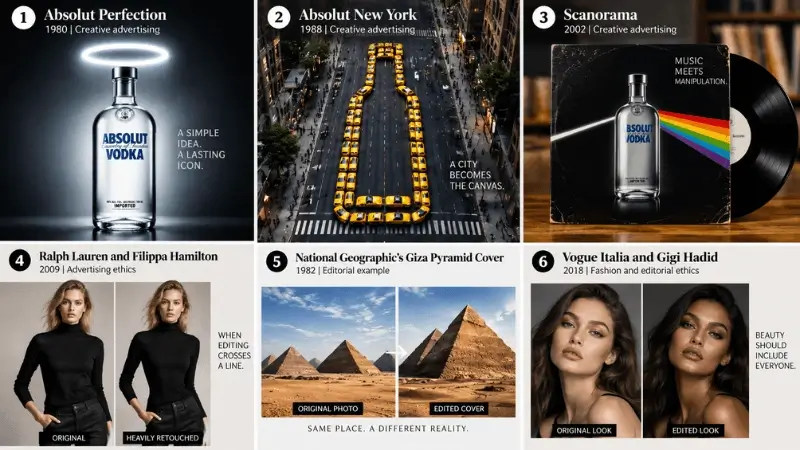
Image manipulation has shaped many memorable visual campaigns. Some brands used it to create clever advertising concepts. Other cases show how excessive editing can raise ethical concerns. The examples below cover both creative and cautionary uses.
1. Absolut Perfection
Year: 1980 | Type: Creative advertising
The “Absolut Perfection” ad helped establish Absolut’s famous visual style. It showed the brand’s bottle with a glowing halo above the cap. The simple composition turned the bottle into the main creative element. It also became the foundation for Absolut’s long-running advertising campaign.
2. Absolut New York
Year: 1988 | Type: Creative advertising
“Absolut New York” used New York’s streets as part of the concept. Photographer Steve Bronstein photographed 34 yellow taxis arranged in the shape of an Absolut bottle. The unusual composition connected the bottle’s silhouette with a recognizable city scene.
3. Scanorama
Year: 2002 | Type: Creative advertising
The “Scanorama” series brought Absolut into famous album artwork. Ads recreated well-known record covers and digitally incorporated the Absolut bottle into each design. The campaign showed how digital editing could connect advertising with popular visual culture.
4. Ralph Lauren and Filippa Hamilton
Year: 2009 | Type: Advertising ethics
A Ralph Lauren ad featuring model Filippa Hamilton became known for extreme retouching. The editing made her waist appear unusually narrow. Ralph Lauren later acknowledged the issue and apologized. The case raised concerns about excessive photo editing in advertising.
5. National Geographic’s Giza Pyramid Cover
Year: 1982 | Type: Editorial example
This was not an advertising campaign. It involved a National Geographic cover featuring the Pyramids of Giza. The original photo was altered for a vertical format. The editing moved the pyramids closer together. National Geographic later called it a lesson in photo ethics.
6. Vogue Italia and Gigi Hadid
Year: 2018 | Type: Fashion and editorial ethics
Vogue Italia’s May 2018 cover featured Gigi Hadid with darker skin and hair. The styling and editing sparked public criticism. Hadid and Vogue Italia later apologized. The case raised concerns about changing a model’s skin tone.
What These Examples Teach Advertisers
These examples show that image manipulation can serve very different purposes. Creative editing can make a campaign distinctive and memorable. It can also help brands build a recognizable visual identity.
However, excessive or poorly judged editing can damage trust. Advertisers should therefore consider both creative goals and audience expectations. The best approach is to make every edit serve a clear visual purpose.
The Creative Image Manipulation Process (Step by Step)
Professional image manipulation follows a clear creative process. Each step helps maintain quality, consistency, and accuracy. Here is how the process usually works.
Step 1: Creative Brief and Concept
The process starts with the campaign’s creative brief. It defines the message, style, audience, and visual goals. The team then creates a clear concept for the final image.
Step 2: Sourcing or Shooting Base Images
Editors collect the photos needed for the project. These may include product, model, background, or stock images. Some campaigns require new photos for better control.
Step 3: Compositing and Background Work
Editors combine different images into one realistic scene. They remove unwanted elements and create suitable backgrounds. Lighting, shadows, colors, and perspective must also match.
Step 4: Client Review and Revisions
The first draft is shared with the client for review. Clients may request changes to colors, objects, positioning, or details. Editors then apply the required revisions.
Step 5: Final Quality Control
The completed image goes through a detailed quality check. Editors check edges, shadows, colors, proportions, and image resolution. This helps prevent visible editing mistakes.
Step 6: Final Delivery and Adaptation
The final image is exported in the required format and size. Different versions may be created for websites, social media, or print ads. This ensures the visual works across every campaign channel.
Common Image Manipulation Techniques Used in Advertising
Advertisers use different techniques to create unique campaign visuals. The right technique depends on the creative concept and final goal.
Compositing and Photo Merging

Compositing combines two or more images into one scene. Editors match lighting, colors, shadows, and perspective carefully. This creates a realistic image from separate source photos. Brands often use this technique for creative product advertising.
Ghost Mannequin for Apparel Ads
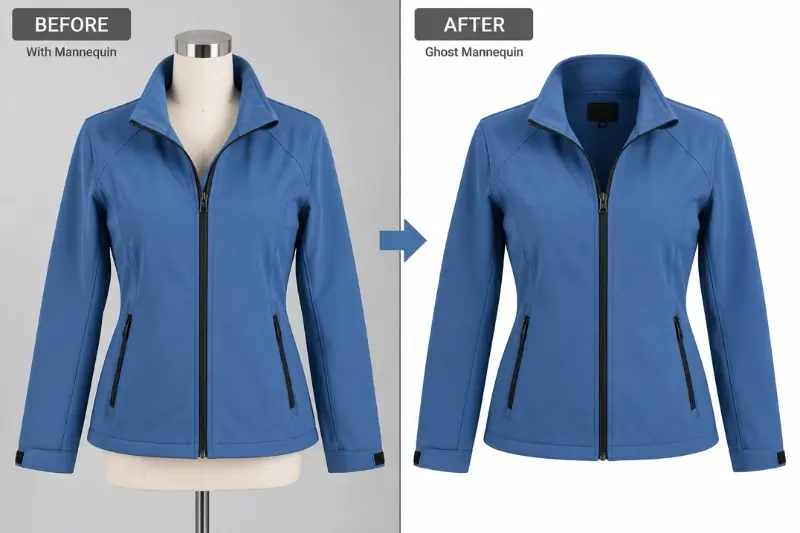
Ghost mannequin editing removes the visible mannequin from clothing photos. It creates the appearance of an invisible model wearing the garment. This technique highlights the product’s shape, fit, and inner details. It is common in fashion and eCommerce advertising.
Digital Painting and Matte Effects
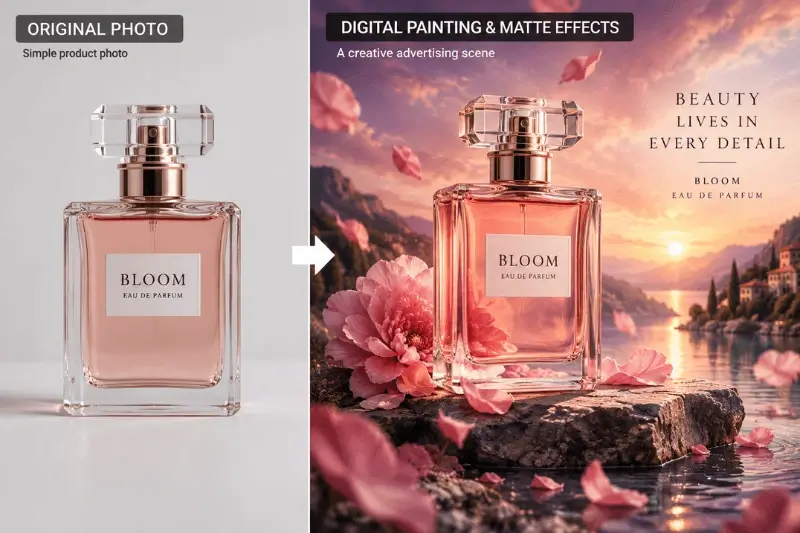
Digital painting adds or changes visual elements using editing software. Editors can create skies, textures, objects, and other custom details. Matte effects can also build realistic or imaginative environments. These techniques help turn simple photos into dramatic advertising visuals.
AI-Assisted Generative Fill
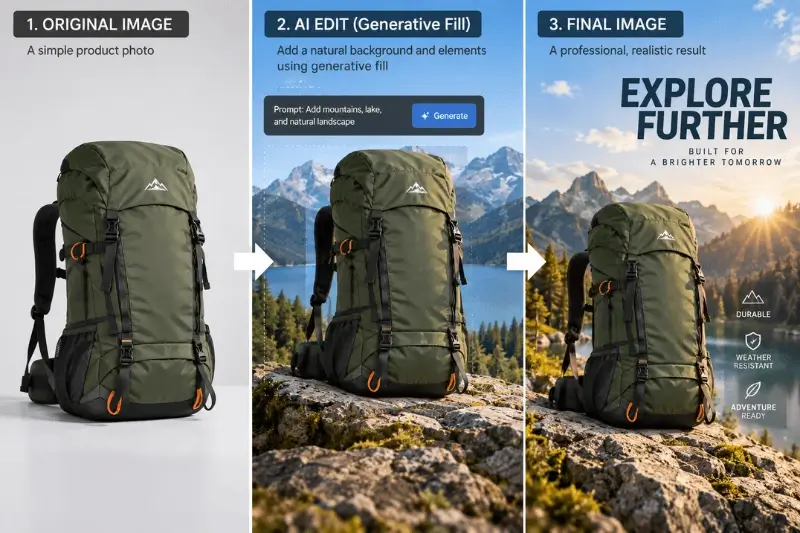
AI tools can now create or replace image elements quickly. Generative Fill can extend backgrounds, remove objects, or add new details. Editors still need to review the results carefully. Human editing helps maintain realism, brand consistency, and visual accuracy.
Ethical Considerations and Advertising Standards
Image manipulation can make advertising more creative and engaging. However, editing should not create misleading or harmful impressions. Brands should balance creative goals with honesty, accuracy, and audience trust.
Past cases show why responsible editing matters. Ralph Lauren faced criticism after an advertisement made model Filippa Hamilton appear unusually thin. The case highlighted concerns about extreme body retouching.
National Geographic faced a different issue. Its Giza Pyramid cover used editing to fit a horizontal photo into a vertical format. The magazine later treated the incident as an important lesson in photographic ethics.
Vogue Italia also faced criticism over its 2018 Gigi Hadid cover. Her skin tone and hair were digitally altered, leading to public concerns about representation.
These examples show that editing choices can affect brand trust. Advertising teams should review major visual changes carefully. The final image should support the campaign without creating a false impression.
Frequently Asked Questions
Yes, image manipulation is generally legal when it does not mislead consumers. Advertisers should avoid edits that falsely represent a product, service, or important feature.
Professional image manipulation can cost from a few cents to several dollars per image. The price depends on editing complexity, image quantity, quality, and turnaround time.
Adobe Photoshop is the most widely used software for advertising image manipulation. Editors may also use Lightroom, Photopea, and AI-powered editing tools for specific tasks.
Yes, AI-generated manipulation uses artificial intelligence to create or change image elements. Traditional manipulation usually involves manual editing of existing images. Both methods can produce professional advertising visuals.
Examples include background replacement, photo compositing, object removal, color changes, and digital scene creation. Brands use these techniques to create unique and engaging advertising visuals.
Final Thoughts
Image manipulation in advertising helps brands create stronger visual stories. It can turn simple photos into memorable campaign visuals. However, effective editing needs more than advanced software.
A successful image should support the campaign message. It should also maintain realistic details and brand consistency. The real-world examples in this guide show both the creative benefits and risks of heavy editing.
Whether you use traditional editing or AI tools, careful review matters. Every change should have a clear creative purpose. When used responsibly, image manipulation can make advertising more engaging, distinctive, and effective.
Need professional image manipulation? Create realistic, creative, and campaign-ready visuals for your advertising campaigns. Start a free trial or request a quote today.