
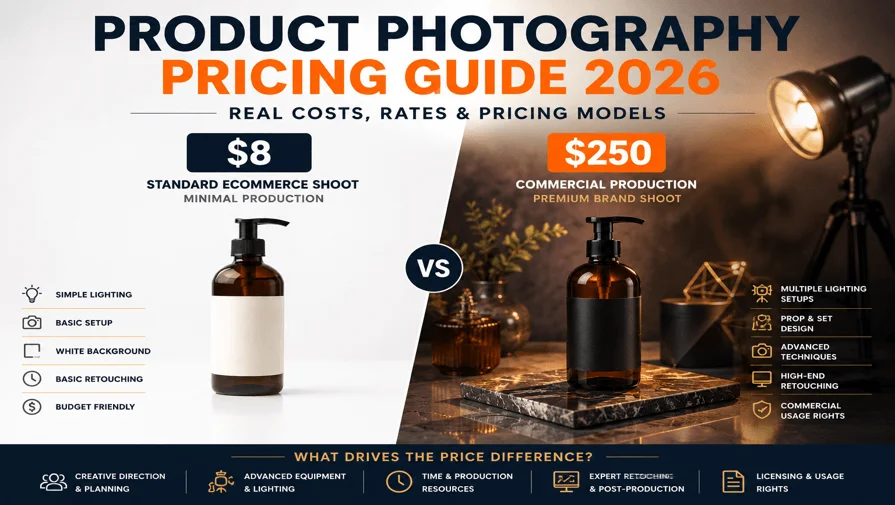
You have two product photos in front of you. Both look professional. They show the same type of product and were both described as “product photography.” One cost $8. The other cost $250. You cannot tell which is which just by looking at them — and that is exactly the problem.
Most businesses find out the hard way that product photography pricing is not random. It is not about which photographer likes you more or which studio has a fancier website. It is about what actually happened during production — the lighting setup that took three hours, the retouching that ran through the night, the creative director who changed the shot list at 7 AM, or the licensing agreement buried in page four of the contract.
Get it right, and your product images drive conversions, build brand trust, and outperform your competitors on every platform they appear on. Get it wrong, and you are paying for reshoots, losing customers to return requests, and wondering why your listings are not converting despite a product that actually looks great in person.
This guide breaks down exactly how product photography pricing works in 2026 — what drives costs up, what keeps them down, and how to make sure every dollar you invest in visuals performs as hard as the product itself.
Average Product Photography Pricing in 2026
Most product photography falls between $5 and $150 per image. Ecommerce product photography sits at the more affordable end of that range. Lifestyle photography, jewelry photography, and commercial advertising campaigns sit significantly higher — often well beyond $150 per image once production costs are factored in.
Average Pricing by Photography Type
| Photography Type | Average Cost Per Image |
|---|---|
| White background photography | $5–$20 |
| Ecommerce photography | $10–$40 |
| Amazon photography | $10–$50 |
| Lifestyle photography | $30–$150 |
| Jewelry photography | $50–$300+ |
| Commercial advertising photography | $200–$5,000+ |
These figures are averages. Actual pricing depends on image quantity, editing depth, production setup, and photographer experience. Bulk projects almost always reduce the per-image rate because the photographer can reuse the same lighting and workflow across multiple products.
Why One Brand Paid $8 Per Image, and Another Paid $250
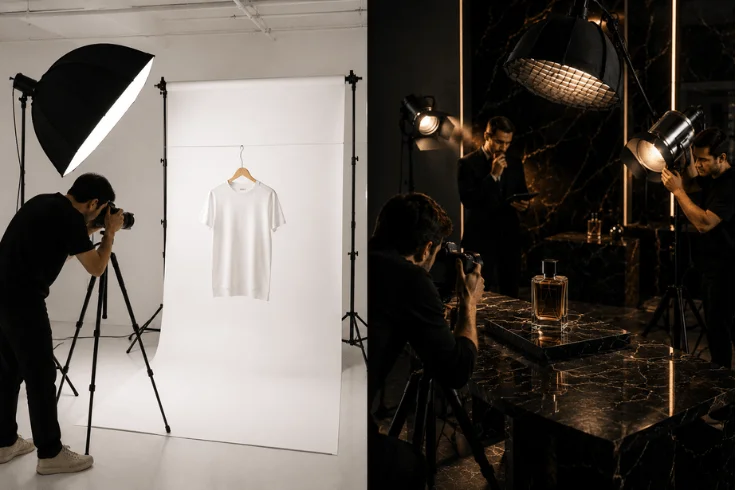
Picture this. It is 8 AM. A photographer walks into a clean, minimal studio. A white backdrop is already set up yesterday. The lighting rig has not moved. Twelve clothing products are hanging in a row, steamed and ready. By noon, all twelve are done. Consistent angles, clean backgrounds, basic retouching. The client gets their files by the end of the week. Total cost? Around $8 per image.
Now picture something different.
It is also 8 AM, but this time the studio looks nothing like that. A creative director is reviewing mood boards. A set designer is arranging custom marble surfaces and hand-selected props flown in from a supplier two states away. A model is in the makeup chair. The lighting team is running test shots, adjusting three separate rigs to get the exact shadow the art director wants. The photographer has not taken a single final frame yet.
By the end of the day, they have captured twelve images. But each one tells a story. The light is deliberate. The shadows are intentional. The product does not just sit there — it commands attention.
Post-production takes another three days. Reflections are added. Backgrounds are composited. Skin tones are refined. Color grading is applied across every frame for campaign consistency.
Final cost? $250 per image. Sometimes more.
The gap between these two shoots is not markup. It is not the photographer charging more because they can. It is the creative director, the set designer, the model, the props, the three lighting rigs, the three days of post-production, and the decade of experience required to pull it all together — on deadline, on brief, and at a standard that a luxury brand can put on a billboard.
Both clients got product photography. But they were never buying the same thing.
Product Photography Pricing by Shoot Type
Different photography styles carry different production requirements. Understanding what each involves helps businesses choose the right style for their budget and marketing goals.
White Background Product Photography Pricing
White background photography is the most widely used and cost-effective product photography style. It is the standard for ecommerce stores, Amazon listings, and online marketplaces. The focus is on clean lighting, consistent angles, minimal styling, and basic retouching. Bulk projects reduce per-image costs significantly.
| Service Type | Average Cost |
|---|---|
| Basic white background photo | $5–$20/image |
| Advanced white background photo | $20–$50/image |
Flat Lay Photography Pricing
Flat lay photography captures products from directly overhead. It is popular for fashion, cosmetics, accessories, and social media content. Styled flat lays require careful composition, prop styling, background coordination, and additional production time to achieve a polished result. Small adjustments in spacing, composition, and color balance can dramatically change the overall presentation.
| Service Type | Average Cost |
|---|---|
| Simple flat lay | $15–$40/image |
| Styled flat lay | $40–$100/image |
Ghost Mannequin Photography Pricing
Ghost mannequin photography gives clothing a clean, professional three-dimensional appearance without a visible model or mannequin. It requires multiple captures, precise alignment, and detailed retouching. Pricing varies based on garment complexity and the level of post-production involved.
| Service Type | Average Cost |
|---|---|
| Basic ghost mannequin image | $20–$50/image |
| Complex apparel retouching | $50–$100/image |
Catalog Product Photography Pricing
Catalog photography prioritizes consistency across large product ranges. It is commonly used by fashion brands, wholesalers, and high-volume ecommerce stores. Because the workflow is standardized, catalog photography is one of the most cost-effective options at scale. This makes catalog photography ideal for brands managing hundreds or thousands of SKUs.
| Catalog Volume | Average Cost |
|---|---|
| Small catalog shoot | $15–$40/image |
| Large bulk catalog shoot | $5–$20/image |
360 Product Photography Pricing
360 photography captures a product from multiple angles to create an interactive rotating view. It requires specialized equipment, precise image alignment, and additional post-production work. 360 photography is most commonly used for premium ecommerce experiences and high-value products.
| 360 Photography Type | Average Cost |
|---|---|
| Basic 360 product shoot | $50–$150/product |
| Advanced 360 interactive shoot | $150–$300+/product |
Creative Product Photography Pricing
Creative product photography prioritizes storytelling and brand identity over simple documentation. These shoots often involve custom lighting concepts, set design, special effects, and detailed post-production. Luxury brands and advertising campaigns invest heavily in creative photography because strong visuals directly influence perception and performance.
| Creative Shoot Type | Average Cost |
|---|---|
| Basic creative product photo | $50–$200/image |
| High-end advertising image | $200–$5,000+/image |
Social Media Product Photography Pricing
Social media photography is designed for platforms like Instagram, TikTok, and Pinterest. It prioritizes eye-catching visuals, lifestyle aesthetics, trend-aware styling, and mobile-optimized composition. Many brands now combine product photography and short-form video content within the same production day.
| Social Media Shoot Type | Average Cost |
|---|---|
| Basic social media image | $20–$60/image |
| Styled campaign content | $60–$250+/image |
What Drives Product Photography Costs Up
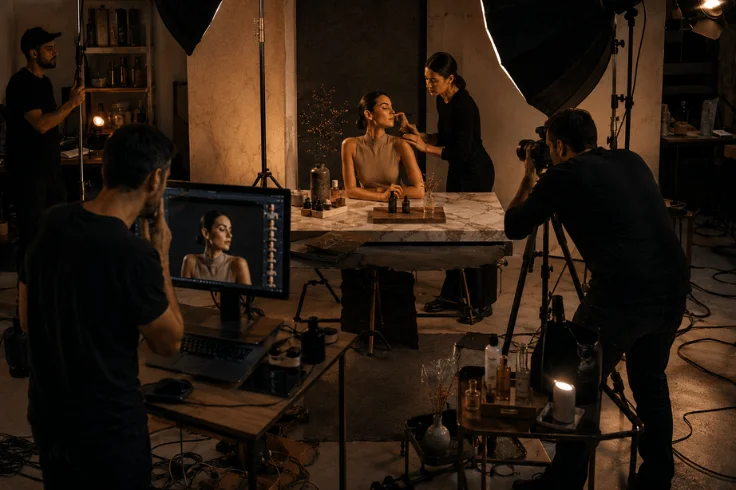
Product Complexity
Reflective, transparent, or highly detailed products require more advanced lighting setups and extensive retouching. A watch brand once spent 3 hours on lighting alone for a single hero shot — the curved glass face kept catching unwanted reflections from every angle. What looked like a simple product turned into a half-day production just for one image.
Image Quantity
Smaller orders usually cost more per image. Large bulk projects reduce pricing because photographers can streamline the workflow across multiple products. A kitchenware brand that booked 5 products paid $45 per image. The same photographer charged $18 per image when they came back with 80 products the following season — same studio, same lighting, dramatically different rate.
Editing Requirements
Basic cleanup and color correction are relatively inexpensive. Advanced retouching, compositing, and shadow creation add significant production time. A cosmetics brand requested that every image have a custom reflection added beneath the product. That single effect added $12 per image in editing costs — across 200 images, that was an extra $2,400 they had not budgeted for.
Props and Styling
Custom sets, premium props, styled backgrounds, and creative direction increase both production complexity and overall cost. A food brand wanted a rustic wooden table, fresh herbs, linen napkins, and ceramic dishes for their sauce photography. Sourcing and styling those props added $600 to the shoot budget before a single photo was taken.
Models and Talent
Professional models, wardrobe stylists, makeup artists, and hairstylists can substantially increase production budgets. A fashion startup booked a model, a makeup artist, and a stylist for a one-day shoot. The photography itself cost $800. Talent and styling added another $1,400 on top — more than the photography budget itself.
Commercial Usage Rights
Images used for paid advertising, print campaigns, packaging, or billboards often require expanded licensing beyond standard ecommerce use. A beverage brand used product photos on its website for a year without issue. When they decided to run the same images on highway billboards, the photographer invoiced them for a commercial licensing upgrade that cost more than the original shoot.
Turnaround Time
Rush delivery usually costs more because photographers must prioritize the project and adjust existing production schedules. An ecommerce brand needed 40 edited images within 48 hours for a flash sale launch. The photographer delivered — but charged a 40% rush fee on top of the standard rate. Planning the shoot two weeks earlier would have cost them nothing extra.
Product Photography Pricing Models Explained
Different photographers use different pricing structures depending on the project type, production workflow, and client requirements. Understanding these pricing models helps businesses compare quotes more accurately and choose the right setup for their budget.
- Per-image pricing — Common for ecommerce and catalog photography. Clients pay for each final edited image delivered.
- Hourly pricing — Often used for custom shoots, lifestyle photography, and smaller commercial projects where production time is difficult to predict in advance.
- Day rates — Large advertising campaigns and complex productions frequently use full-day pricing instead of hourly billing. This model is common in fashion, lifestyle, and commercial photography.
- Package pricing — Many ecommerce brands prefer package pricing because it combines photography, basic editing, resizing, and exports into one predictable cost structure.
- Retainer pricing — Some brands work with photographers on monthly retainers for ongoing ecommerce content, social media campaigns, or seasonal product launches.
Choosing the right pricing model depends on production complexity, image quantity, turnaround expectations, and long-term content needs.
Product Photography Hourly and Day Rates
Some photographers charge per image, while others use hourly or day rates. Time-based pricing is more common for custom shoots, lifestyle campaigns, and commercial productions where the scope and production time are harder to estimate in advance. In 2026, product photography hourly rates typically range from $25 to $500+ depending on experience and project complexity.
| Experience Level | Average Hourly Rate |
|---|---|
| Beginner photographer | $25–$50/hour |
| Intermediate photographer | $50–$150/hour |
| Professional commercial photographer | $150–$500+/hour |
These rates may or may not include editing, studio rental, props, assistants, or equipment costs. Always confirm what is included before signing off on a quote. Large commercial productions often use day rates instead of hourly pricing. Shoots involving models, stylists, set design, and multiple lighting setups are typically billed as full production days because the workflow is too complex for simple hourly estimation.
| Production Type | Average Day Rate |
|---|---|
| Small studio shoot | $300–$1,000/day |
| Lifestyle product shoot | $1,000–$5,000/day |
| Commercial advertising campaign | $5,000+/day |
Product Photography Package Pricing
Package pricing is common among ecommerce brands, Amazon sellers, and businesses that need ongoing content. A well-structured package typically includes photography, basic editing, resizing, and web-ready exports — often at a lower overall cost than paying per image for the same scope.
| Package Type | Average Cost |
|---|---|
| Basic ecommerce package | $50–$300 |
| Small product catalog package | $300–$1,000 |
| Amazon listing package | $200–$1,500 |
| Lifestyle photography package | $500–$5,000+ |
Larger packages often reduce the effective per-image cost because photographers can streamline lighting setups, editing workflows, and production time across multiple products. Many ecommerce brands use package pricing for seasonal launches, catalog updates, and ongoing content production.
Product Photo Editing and Retouching Costs
Product photo editing costs vary depending on the complexity of the product, the level of retouching required, and the intended commercial use of the final images. Basic editing is often included in standard photography pricing. Advanced retouching is almost always an additional cost.
| Editing Service | Average Cost |
|---|---|
| Basic retouching | $0.50–$5/image |
| Background removal | $0.25–$10/image |
| Ghost mannequin editing | $2–$15/image |
| Advanced product retouching | $10–$50/image |
| High-end beauty retouching | $50–$200+/image |
Basic editing typically covers color correction, dust removal, cropping, and background cleanup. Advanced retouching includes reflection control, shadow creation, compositing, texture cleanup, and detailed enhancement commonly used in commercial advertising and premium ecommerce photography.
Need editing done right? Check out our Product Photo Editing Service.
Commercial Usage and Licensing Costs
Commercial usage rights can significantly affect product photography pricing, especially for advertising campaigns and large-scale brand marketing. In many cases, photographers charge separately for licensing in addition to the production cost of the shoot.
| Usage Type | Typical Licensing Impact |
|---|---|
| Ecommerce website use | Usually included or low-cost |
| Social media advertising | Moderate additional cost |
| Print advertising | Higher licensing fees |
| Packaging and product labels | Extended commercial licensing |
| Billboards and national campaigns | Premium licensing rates |
| Exclusive usage rights | Significantly higher pricing |
Licensing costs often depend on usage duration, geographic reach, advertising scale, and exclusivity requirements. Images used for national campaigns, packaging, or billboard advertising typically cost much more than standard ecommerce product photos because the commercial exposure is significantly larger.
How to Reduce Photography Costs Without Sacrificing Quality
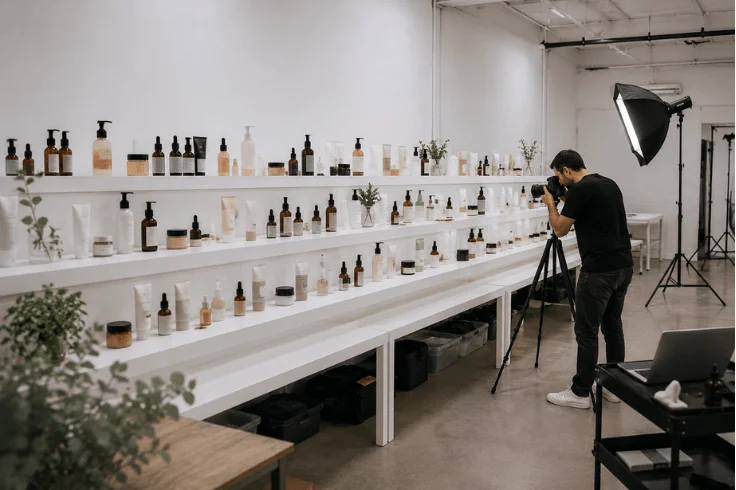
Most brands overspend on photography, not because they chose the wrong photographer, but because they did not plan the shoot properly. A few simple decisions made before the shoot even starts can cut costs significantly without touching image quality.
The single biggest lever is bulk shooting. Photographing multiple products in one session means the same lighting setup, the same backdrop, and the same workflow runs across everything. A brand that shoots 5 products pays setup costs once. A brand that shoots 50 products in the same session pays those setup costs once too. The math is simple — but many brands still book small batches and wonder why their per-image cost stays high.
Style choice matters just as much. A white background ecommerce shoot moves fast and costs less. A fully styled lifestyle shoot with props, models, and custom sets costs more — not because photographers are overcharging, but because the production is genuinely more complex. If your goal is a clean, converting product listing, you do not need a lifestyle production budget to get there.
Product preparation is one of the most overlooked cost factors. Products that arrive wrinkled, dusty, or unassembled slow down the shoot and increase retouching time. Every extra minute on set costs money. Every imperfection that gets missed costs more in post-production. Arriving shoot-ready is free — and it makes a real difference.
Finally, give your photographer a detailed shot list before the day begins. Vague briefs lead to missed angles, on-set confusion, and expensive reshoots. A clear shot list keeps the production moving and removes the guesswork that quietly inflates costs on both sides.
How to Choose the Right Product Photographer
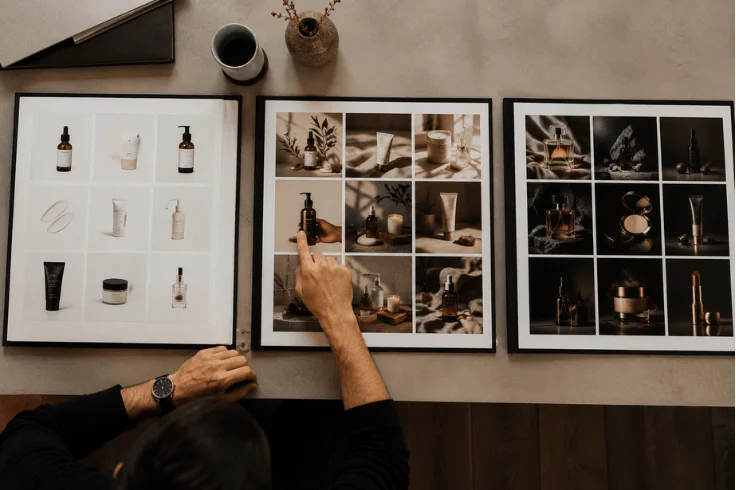
Price is the easiest thing to compare when you are looking at photographer quotes. It is also the least useful thing to focus on.
A photographer charging $8 per image and a photographer charging $80 per image are not offering the same service with different price tags. They are offering different levels of lighting skill, editing quality, production experience, and creative direction. The gap shows up in the final images — and in your conversion rates.
Start with the portfolio. Look beyond the surface. Consistent lighting across multiple projects signals technical control. Accurate color representation matters more than most brands realize — it directly affects return rates. Clean, detailed editing shows how much care goes into post-production. If a portfolio looks impressive but inconsistent, that inconsistency will show up in your images too.
Industry experience is not a bonus — it is a requirement for certain product types. Jewelry, food, apparel, electronics, and cosmetics each demand different technical approaches and lighting setups. A photographer who specializes in furniture will not automatically know how to handle the reflective surfaces of a watch or the translucency of a skincare serum. Ask directly about experience with your product category before booking.
Before signing anything, get clarity on what is actually included. Editing scope, background removal, revision rounds, resizing, file formats, and commercial usage rights should all be confirmed in writing. Many disputes between brands and photographers come down to assumptions — one side assumed revisions were unlimited, the other assumed two rounds were the standard. Assumptions are expensive. Written agreements are not.
Turnaround time is worth discussing upfront, too. A photographer who delivers in three days and one who delivers in three weeks are not interchangeable, depending on your launch schedule. Know the timeline before you commit, not after.
Common Mistakes Brands Make with Photography Budgets
Choosing based on price alone is one of the most common and costly mistakes brands make. Poor-quality images increase bounce rates, reduce conversions, and weaken the credibility of an otherwise strong brand.
Other common issues include failing to clarify what editing is included, underestimating licensing costs for commercial use, requesting multiple rounds of revision without adjusting the production budget, and not preparing products properly before shipping — all of which increase retouching time and overall production costs.
Real Brands, Real Mistakes: What Went Wrong
Story 1: The Shopify Store That Lost Thousands in Returns
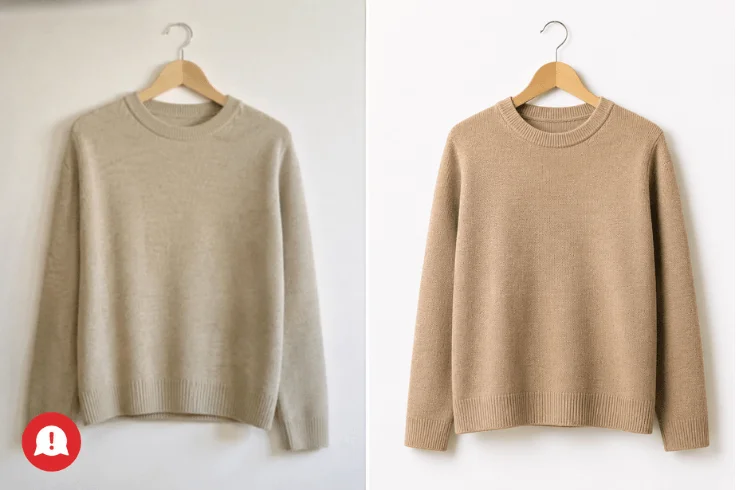
A mid-sized clothing brand launched their new summer collection with low-budget photography. The photographer charged $3 per image, delivered fast, and the brand thought they had scored a deal. Three weeks after launch, return requests spiked. Customers complained that the colors looked nothing like what arrived. The washed-out, poorly lit images had misrepresented the actual fabric tones. The brand ended up spending more on reshoot costs and return logistics than they had saved on the original photography budget.
Lesson: Cheap photography does not just look bad — it can actively cost you money through returns and lost trust.
Story 2: The Skincare Brand That Forgot About Licensing
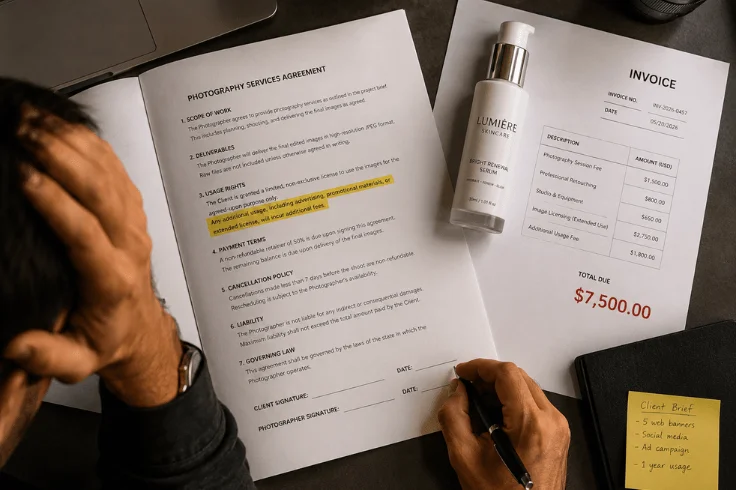
A growing skincare brand hired a photographer for their product launch. The shoot went well, the images looked great, and the brand moved forward with a national print advertising campaign. Two months later, they received a licensing invoice from the photographer. The original agreement only covered website use. Expanding to print and billboard advertising required a separate commercial license — at a cost they had never budgeted for. The campaign was delayed while contracts were renegotiated.
Lesson: Always clarify licensing terms before the shoot, not after. Website use and advertising use are almost never the same agreement.
Story 3: The Amazon Seller Who Skipped Bulk Shooting
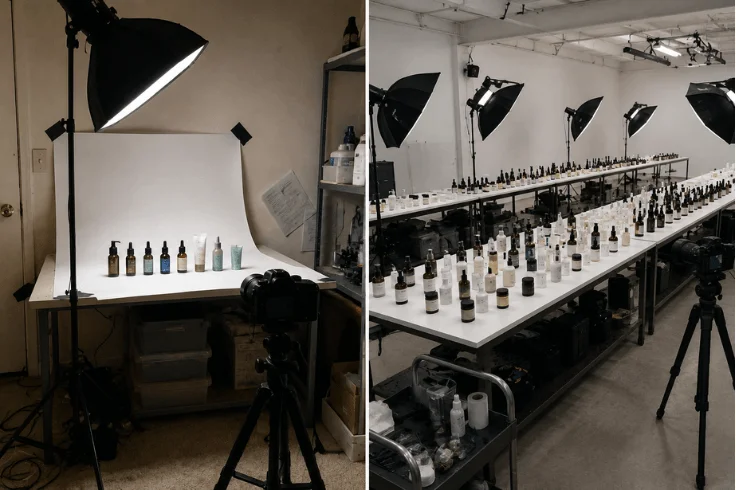
A home goods seller had 60 products to photograph. To manage cash flow, they decided to shoot 10 products at a time across six separate sessions. Each session had its own setup fee, equipment cost, and minimum booking charge. By the end of the sixth session, they had paid nearly double what a single bulk shoot would have cost. Worse, the lighting and color tone varied slightly across sessions, making the storefront look inconsistent.
Lesson: Bulk shooting is almost always cheaper and more consistent. If you have more than 15 products, plan them together from the start.
Product Photography Pricing: At a Glance
| What You Want to Know | Quick Answer |
|---|---|
| Most affordable option | White background — $5–$20 |
| Most expensive option | Commercial ads — $200–$5k+ |
| Average ecommerce cost | $10–$40/image |
| Does bulk shooting save money? | Yes, significantly |
| Is licensing charged separately? | Yes, for advertising use |
| Best option for Amazon sellers | Amazon photos — $10–$50 |
FAQs About Product Photography Pricing
Most product photography costs between $5 and $150 per image in 2026. Simple white background ecommerce photos sit at the lower end of the range, while lifestyle photography, jewelry photography, and commercial advertising images cost significantly more because of higher production and retouching requirements.
Product photography pricing reflects far more than simply taking pictures. Lighting setup, styling, props, editing, retouching, equipment, studio costs, commercial licensing, and production time all contribute to the final price.
Many ecommerce photographers charge per image because it creates predictable pricing for catalog and online store projects. Lifestyle and commercial photographers often use hourly or day rates for productions where the scope and production time are harder to estimate in advance.
Basic editing is often included in standard pricing. This usually covers cropping, color correction, dust removal, and background cleanup. Advanced retouching, compositing, ghost mannequin editing, and beauty retouching are commonly billed separately.
Amazon product photography typically costs between $10 and $50 per image depending on the product category, image complexity, and editing requirements. Lifestyle images and infographic-style listing images may increase the total cost.
Ghost mannequin photography usually costs between $20 and $100 per image, depending on garment complexity and the level of retouching required. Complex apparel editing and invisible mannequin effects typically increase pricing.
Related Articles
Final Thoughts
Every product photography decision you make is a bet on how your customer will respond.
A poorly lit image bets that your customer will overlook it. A misrepresented color bet that they will not notice until after they buy. A licensing agreement you did not read bets that the photographer will not either. Most of the time, those bets lose — quietly, through lower conversions, higher return rates, and a brand that never quite looks as good as the product deserves.
The brands that get product photography right are not always the ones with the biggest budgets. They are the ones who understand what they are actually buying. To them, $8 per image and $250 per image are not points on the same scale. They are entirely different products serving entirely different goals. Successful shoots are planned long before production day arrives, with licensing clarified before ads go live and products properly prepared before they ever reach the studio.
Product photography is not a line item to minimize. It is the first thing your customer sees, often before they read a single word of your copy. It is the difference between a scroll and a stop. Between a click and a conversion. Between a brand that looks like it belongs and one that looks like it is still figuring things out.
You now know how the pricing works, what drives costs up, and how to avoid the mistakes that quietly drain photography budgets. The rest is just making the decision — and making it before the shoot, not after. Spend it where it shows. It always does.