
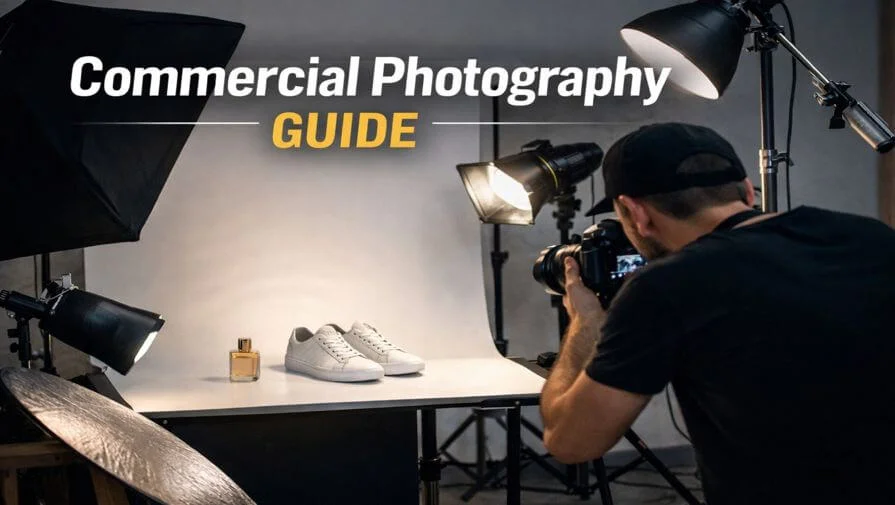
Commercial photography is one of the most important types of photography used in modern marketing. Businesses use high-quality images to promote their products, services, and brand identity across websites, advertisements, social media, and eCommerce platforms.
In simple terms, commercial photography refers to photography created specifically for commercial use. The goal is to present a product, service, or brand in a visually appealing way that attracts customers and increases sales.
From product and fashion photography to food and real estate photography, commercial images play a crucial role in modern marketing. In this guide, we will explore what commercial photography is, its types, and practical tips to shoot like a professional. If you want to explore more styles, you can read our guide on different types of photography.
What is Commercial Photography?
Commercial photography is the practice of taking professional photos for business, marketing, and advertising purposes. These images promote products, services, or brands to attract customers. Businesses commonly use commercial photography for advertisements, eCommerce product listings, social media marketing, and product catalogs.
Common Types of Commercial Photography
Commercial photography includes several specialized niches. Each type focuses on a specific subject or industry.
Food Photography

Food photography is used by restaurants, food brands, and cookbooks to showcase dishes in an attractive way. Proper lighting, styling, and color balance help make food look fresh and delicious. If you want to learn more techniques, check out our detailed guide on food photography for beginners.
Fashion Photography

Fashion photography promotes clothing, accessories, and lifestyle brands. These photos are commonly used in magazines, fashion websites, and advertising campaigns.
Real Estate Photography

Real estate photography showcases homes, apartments, and commercial properties. Professional real estate photos help attract buyers and increase property sales. You can explore more techniques in our guide on real estate photography tips.
Car Photography
Car photography highlights vehicles for automotive companies, dealerships, and advertisements. Creative lighting and angles are used to emphasize design and performance.
Portrait Photography
Portrait photography captures individuals or groups for professional use. Businesses often use portrait photography for corporate branding, company profiles, and promotional materials.
Sports Photography
Sports photography captures athletes, sporting events, and fitness-related products. Fast shutter speed and timing are essential to capture action shots.
Product Photography
Product photography focuses on capturing clear and detailed images of products for eCommerce stores and marketing materials. It highlights product features, textures, and design to attract potential buyers.
Additional Types of Commercial Photography
Commercial photography covers a wide range of specialized niches depending on the industry and marketing needs. Besides the common types mentioned earlier, several other categories are also widely used in business marketing.
Lifestyle Photography

Lifestyle photography shows products being used in real-life situations. Instead of focusing only on the product, it highlights how the product fits into a customer’s daily life. Many brands use lifestyle photography for social media and advertising campaigns.
Advertising Photography
Advertising photography focuses on creating images specifically designed for marketing campaigns. These images are used in billboards, magazine ads, posters, and digital advertising to attract customers and promote products or services.
Architecture Photography
Architecture photography captures buildings, interior spaces, and structural designs. Real estate companies, architects, and construction firms often use these images for marketing and documentation purposes.
Corporate Photography

Corporate photography is used by businesses for professional branding. It includes corporate headshots, office environments, team photos, and workplace activities that represent a company’s professional image.
How to Start a Career in Commercial Photography
Starting a career in commercial photography requires both technical skills and creative vision. Here are some essential steps for beginners.
Build a Professional Portfolio
A strong portfolio is the most important asset for any photographer. Clients usually decide whether to hire a photographer based on previous work. Create a portfolio website and showcase your best projects. Focus on quality rather than quantity and highlight your expertise in specific niches.
Work as an Assistant
If you are new to photography, working as an assistant for an experienced photographer can help you learn faster. You can see how professional photoshoots are done and gain real experience. During this time, you will learn about lighting, camera settings, composition, and how to work with clients. This experience will help you build confidence and improve your skills.
Choose a Photography Niche
Commercial photography has many different areas, which can be confusing for beginners. Instead of trying everything, it is better to focus on one niche that interests you. For example, you can choose product photography, food photography, fashion photography, or real estate photography. Focusing on one niche helps you improve your skills and attract the right clients.
If you are interested in selling products online, learning product photography tips can help you create high-quality images for eCommerce stores.
Essential Commercial Photography Tips
Understand Client Requirements
Before starting any photography project, clearly understand the client’s needs.
Ask questions like:
- What is the purpose of the photos?
- Where will the images be used?
- How many images are required?
- What style does the client prefer?
Clear communication ensures better results and avoids misunderstandings.
Understand the Intended Use of the Image
Different platforms require different types of images.
For example:
- eCommerce images usually require clean white backgrounds
- Advertising images require creative composition
- Social media images need bright colors and engaging visuals
Knowing the purpose helps you plan the shoot effectively.
Set Your Pricing Strategically
Pricing plays a major role in commercial photography. Charging too low may make your work appear less professional, while charging too high may discourage potential clients.
Research the market and set a fair price based on your experience and project requirements.
Prepare Before the Photoshoot
Preparation is essential for a successful photoshoot. Always carry the necessary equipment and plan your shots in advance.
Essential equipment includes:
- Professional camera
- Multiple lenses
- Tripod
- Lighting equipment
- Extra batteries
- Memory cards
Proper preparation saves time and ensures a smooth workflow during the shoot.
Build Strong Client Relationships
Professional attitude and communication skills are crucial in commercial photography.
Always maintain professionalism by:
- Delivering work on time
- Communicating clearly
- Listening to client feedback
- Showing appreciation to clients
Satisfied clients often recommend photographers to others, helping grow your business.
Use Social Media to Promote Your Work
Social media platforms are powerful tools for photographers to showcase their work and attract new clients.
Popular platforms include:
Posting high-quality images regularly helps build a strong online presence and personal brand. Improving your shooting techniques is also important. You can check out our collection of photography tips for better results.
Essential Equipment for Commercial Photography
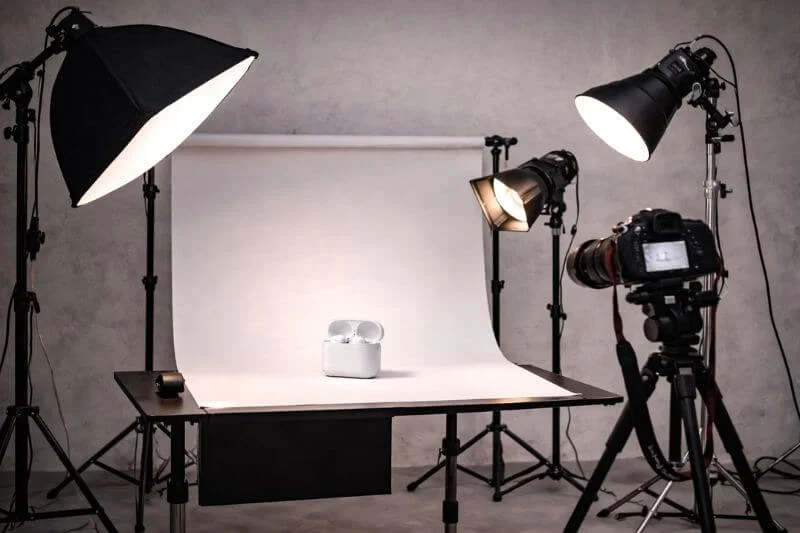
Having the right equipment is important for producing high-quality commercial images. Professional photographers rely on various tools to achieve professional results.
Essential equipment includes:
- Professional Camera (DSLR or Mirrorless)
- Prime and Macro Lenses
- Tripod
- Studio Lighting (Softboxes, LED lights, Strobes)
- Reflectors and Diffusers
- Background Setup (White or Colored Backdrops)
Using the right equipment helps photographers create high-quality images suitable for commercial marketing. Proper lighting is very important in professional photography, and you can learn more in our guide on photography lighting techniques.
Commercial Photography vs Product Photography
Many people confuse commercial photography with product photography, but they are not exactly the same. The table below explains the key differences between them.
| Feature | Commercial Photography | Product Photography |
|---|---|---|
| Purpose | Used for marketing, branding, and advertising campaigns | Focuses on showcasing individual products clearly |
| Scope | Covers many types of photography used in business promotion | Mainly focused on photographing products |
| Background | Often includes lifestyle or creative environments | Usually uses simple or white backgrounds |
| Usage | Advertisements, social media campaigns, brand marketing | eCommerce stores, product catalogs, online marketplaces |
| Example | A model using a product in an advertisement | A product placed on a plain white background |
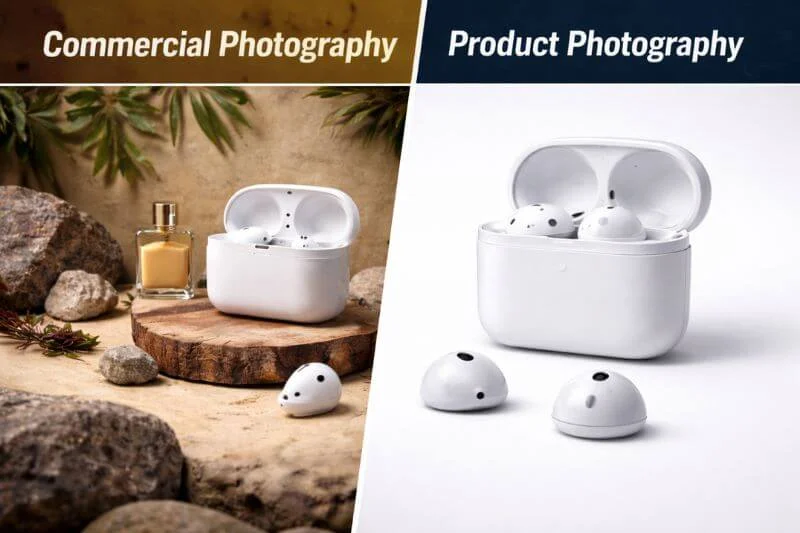
In short, Product photography is a part of commercial photography, but commercial photography includes a wider range of visual marketing content.
Commercial Photography Examples

Commercial photography can be seen almost everywhere in modern marketing. Businesses rely on professional images to showcase their products and services across different platforms.
Some common examples include:
- eCommerce product images on online stores
- Food photos used in restaurant menus and delivery apps
- Fashion photos used in clothing brand advertisements
- Real estate images used in property listings
- Corporate portraits used on company websites
- Social media promotional photos for brands
These images help businesses communicate their message visually and attract potential customers. High-quality visuals play a major role in marketing. Studies from HubSpot show that visual content helps increase engagement and brand recognition.
Best Photo Editing Software for Commercial Photography
Photo editing is an essential step in commercial photography. Editing helps enhance colors, correct lighting, and improve the overall visual appeal of images.
Popular photo editing software includes:
- Adobe Photoshop
- GIMP
- Photopea
- Snapseed
- Aurora HDR
- ACDSee
- PhotoDirector
Professional editing ensures that the final images meet commercial quality standards. Many businesses also hire a professional photo editing agency to enhance their commercial images and maintain consistent quality.
Final Thoughts
Commercial photography is an essential part of modern marketing. Businesses depend on high-quality visuals to promote their products and attract customers. By mastering lighting, composition, and editing techniques, photographers can create powerful images that drive business results.
With continuous practice, creativity, and strong client relationships, you can build a successful career in commercial photography.
Frequently Asked Questions
Here are some frequently asked questions about commercial photography.
The main purpose of commercial photography is to create visually appealing images that promote products, services, or brands and help businesses attract customers.
The most important elements include lighting, composition, subject focus, and professional editing.
Commercial photography is used in industries such as eCommerce, fashion, food, real estate, advertising, automotive, and corporate branding.
Beginners should start by building a portfolio, learning from experienced photographers, choosing a niche, and practicing consistently.