

Online shoppers cannot touch, test, or physically examine products before purchasing. Effective visual content helps bridge this gap by giving customers a clearer understanding of what they are considering.
Product photos show important details. Videos demonstrate how products work. Infographics explain key features. Together, these visuals help shoppers understand products and build trust in a brand. This guide covers why visual content matters in e-commerce marketing and how to use it effectively.
Why Is Visual Content Important in E-commerce Marketing?
People process visuals faster than text. Visuals help e-commerce businesses present products clearly. High-quality visuals also capture attention, build trust, and strengthen brand identity. Here are the key ways visual content supports online stores.
1. Capture Customer Attention Quickly
Product images and videos often create the first impression when shoppers visit an online store. Clear, attractive, and relevant visuals help products stand out and encourage visitors to explore further.
For example, a well-lit product photograph with a clean background makes it easier to recognize an item’s shape, color, and design. A short demonstration video can provide additional context by showing how the product works.
Combining product photography, lifestyle images, and informative graphics helps retailers present their offerings in ways that attract attention without overwhelming visitors.
2. Help Customers Evaluate Products

Online shoppers cannot physically examine products before purchasing. This creates uncertainty about dimensions, materials, colors, textures, and other product characteristics.
High-resolution photographs from multiple angles help address this challenge. Close-up images, zoom functionality, and 360-degree product views allow shoppers to inspect important details more carefully.
For example, close-up photographs can help customers examine the stitching of a handbag, the texture of a fabric, or the finish of a piece of jewelry. Providing these visual details helps customers understand what they are buying and make more informed decisions.
3. Support Purchase Decisions and Conversions
Product visuals support purchasing decisions by communicating information that customers might otherwise struggle to understand through written descriptions alone. Baymard Institute’s product page usability research found that 56% of test participants first explored product images when they landed on a product page, before reading descriptions or other details.
When customers can easily evaluate a product’s appearance, features, and usage through clear visuals, they can make more informed purchasing decisions. Accurate product photography and demonstration videos also help establish realistic expectations, potentially reducing misunderstandings and avoidable returns.
4. Improve Social Media Marketing
Visual content is central to social media marketing because platforms encourage users to discover and interact with photographs, videos, and other visual formats. E-commerce brands can use product demonstrations, promotional graphics, and short-form videos to introduce their offerings to relevant audiences.
Engaging social media visuals can encourage:
- Likes and reactions
- Shares and comments
- Website clicks
- Saves and bookmarks
- Product discovery
Consistent visual presentation across social media and online stores also helps customers recognize products and become familiar with a brand.
5. Support Influencer Marketing Campaigns
Influencer marketing uses visual storytelling to introduce products through demonstrations, tutorials, reviews, and everyday experiences. For example, a beauty influencer can demonstrate how to use a skincare product, while a fashion creator can show how different clothing items fit into everyday outfits.
These formats provide context that traditional product advertisements may not offer. They help potential customers see how products look and function in real-world situations. When combined with relevant product information, influencer-generated visuals can strengthen brand awareness and help shoppers evaluate available offerings.
6. Improve the Shopping Experience Across Devices
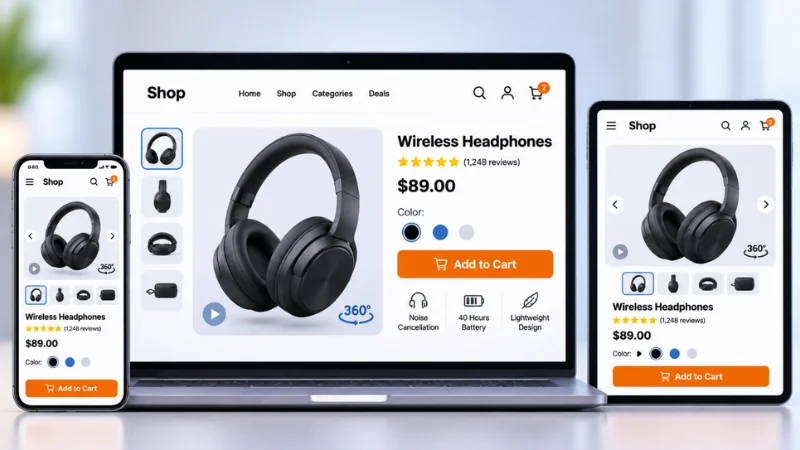
Visual content contributes to a better shopping experience when it is easy to view, navigate, and understand across desktop and mobile devices.
Online stores should consider:
- Responsive product images
- Mobile-friendly image galleries
- Properly sized product photographs
- Short and accessible demonstration videos
- Easy navigation between product views
Image optimization is equally important. Large, unoptimized files can slow down product pages, while poorly compressed images may lose important visual details. Balancing image quality with website performance helps retailers provide a smoother browsing experience.
7. Strengthen Brand Identity
Consistent visual content helps e-commerce businesses establish a recognizable brand identity. Customers gradually become familiar with a brand when they repeatedly encounter similar photography styles, colors, graphics, and presentation standards.
Important elements include:
- Brand colors and typography
- Product photography style
- Backgrounds and lighting
- Graphic design elements
- Packaging and promotional visuals
Maintaining consistency across product pages, advertisements, and social media creates a more cohesive brand experience. It also helps brands communicate their identity and maintain a professional appearance across different marketing channels.
What Are the Best Types of Visual Content for E-commerce?
Different visual formats serve different purposes in e-commerce marketing. Product photographs help customers inspect items, videos demonstrate functionality, lifestyle images provide context, and infographics communicate specifications.
The following table explains how businesses can use these formats.
| Visual Content Type | Primary Purpose | Example |
|---|---|---|
| Product Photography | Show product appearance and details | Multiple-angle product images |
| Lifestyle Photography | Present products in real-world settings | Furniture in a furnished room |
| Product Videos | Demonstrate functionality | Electronics demonstration |
| Infographics | Explain specifications and benefits | Product dimensions and feature comparisons |
| User-Generated Content | Show authentic customer experiences | Customer product photographs |
| 360-Degree Views | Allow interactive product inspection | Rotating product displays |
Choosing the right format depends on the product, target audience, and information customers need before making a purchase.
Best Practices for Using Visual Content in E-commerce
Creating visual content is only the first step. Businesses must also ensure that their visuals are accurate, consistent, accessible, and suitable for their target audiences. These best practices can help improve product presentation and support a more effective e-commerce visual strategy.
1. Use High-Resolution Product Images
High-resolution product images help shoppers examine details that may influence their purchasing decisions. Blurry, poorly lit, or pixelated photographs can make products appear less appealing and create uncertainty about their quality.
Baymard Institute’s usability research highlights how insufficient image quality can prevent shoppers from examining important product details. When customers cannot inspect a product clearly, it may create uncertainty during the purchasing process.
For better presentation:
- Use appropriate lighting and sharp focus.
- Maintain accurate product colors.
- Show important details and textures.
- Use consistent image dimensions across product catalogs.
- Compress images without noticeably reducing visual quality.
Professional image editing also helps maintain consistency across product catalogs. Techniques such as background removal, precise product cutouts, color correction, and image retouching help businesses create clean and visually consistent product presentations.
2. Add Product Demonstration Videos
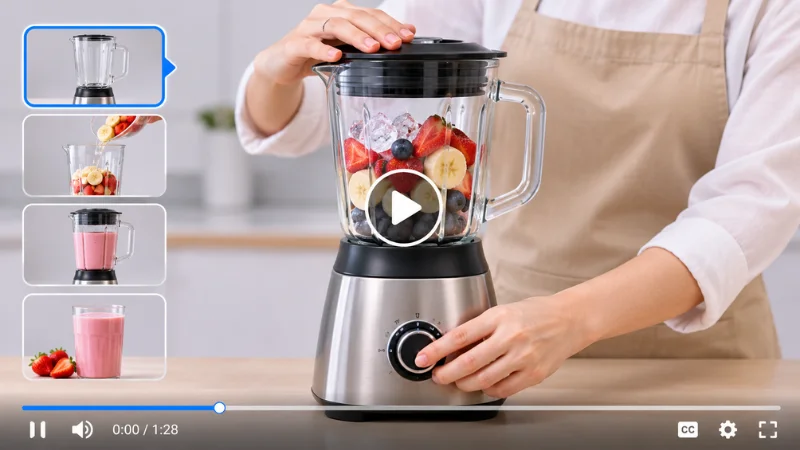
Product demonstration videos show how merchandise works and help customers understand features that static images cannot fully explain.
Whatmore, a shoppable video provider, ran controlled A/B tests across seven brands. It reported a 17–33% average lift in site-wide conversion rate compared with versions without video. These are vendor-reported results and vary by business. Still, they show the potential of interactive product videos.
Effective product videos should focus on relevant features, demonstrate practical usage, maintain clear visual and audio quality, and work well across mobile and desktop devices. Short, informative demonstrations make complex product information easier to understand and can support purchase decisions.
3. Feature Lifestyle Photography

Lifestyle photography presents products in realistic environments instead of displaying them exclusively against plain backgrounds. For instance, a furniture retailer can show a sofa in a furnished living room, while a clothing brand can feature outfits in everyday settings.
These images help customers visualize how products might fit into their lives. They also provide additional context about product scale, appearance, and possible uses. Combining lifestyle photography with clean product images gives shoppers a more complete understanding of an offering.
4. Explain Complex Information with Infographics

Infographics help brands communicate product specifications, comparisons, and benefits through organized visual information. They are particularly useful when customers need to understand technical details that cannot be explained effectively through product photographs alone.
Online stores can use infographics to:
- Compare product features
- Highlight technical specifications
- Display measurements and dimensions
- Explain product functions
- Present important benefits
For example, an infographic for a household appliance can highlight its dimensions, power requirements, and key functions in one easy-to-understand visual. Keep text concise and ensure that important information remains readable on smaller screens.
5. Encourage User-Generated Content
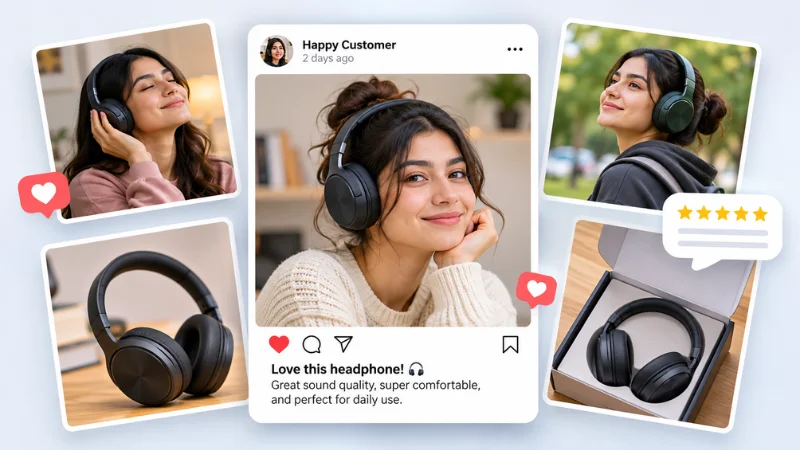
User-generated content (UGC) consists of photographs, videos, reviews, and other materials created by customers rather than the brand itself.
Examples include:
- Customer product photographs
- Video reviews
- Social media posts
- Product testimonials
- Unboxing videos
Retailers can encourage customers to share their experiences and feature appropriate content on product pages and social media channels, with permission where required.
UGC can provide several benefits:
- Shows products in real-world situations
- Adds customer perspectives to product pages
- Encourages community engagement
- Supports purchasing decisions
- Strengthens brand credibility
Combining authentic customer content with professional product photography gives shoppers different perspectives when evaluating products.
6. Use AI Image Search for E-commerce Research

Visual research helps e-commerce businesses understand product presentation trends, explore competitor strategies, and discover new content ideas. AI-powered visual search makes this process easier by allowing users to find visually similar images without relying entirely on text-based queries.
Brands can use an AI image search tool to explore similar product photographs, identify visual trends, and discover how competitors present their products across online platforms.
This approach can help businesses:
- Research competitors’ product presentation strategies
- Discover visually similar product images
- Find inspiration for new marketing visuals
- Identify potential unauthorized uses of brand images
- Explore different photography and styling approaches
By incorporating visual search into their research process, e-commerce businesses can make more informed decisions about product presentation and visual marketing strategies. Businesses should still verify image ownership and usage rights before reusing visual materials.
7. Follow Emerging Trends in E-commerce Visual Content
New technologies continue to introduce ways for businesses to present products and communicate with online shoppers.
Some important developments include:
- Augmented Reality (AR): Allows shoppers to visualize certain products in their surroundings, such as furniture in a living room.
- 360-Degree Product Views: Enables customers to inspect products from multiple angles through interactive viewing experiences.
- Interactive Videos: Combines product demonstrations with clickable elements that help viewers explore featured products.
- AI-Generated Visuals: Supports the creation of marketing graphics and customized visual assets. Businesses should ensure that generated imagery accurately represents the products being advertised.
- AI-Assisted Image Editing: Helps streamline image enhancement, background adjustments, and other editing workflows while supporting consistent product presentation.
Businesses should evaluate these technologies based on customer needs, product suitability, and practical value rather than adopting trends simply because they are new.
How Can Businesses Measure the Effectiveness of E-commerce Visual Content?
Businesses can evaluate their visual content strategy by monitoring how customers interact with product pages and whether visual improvements contribute to better shopping experiences.
Useful performance indicators include:
- Product Page Engagement: Shows how visitors interact with product pages and galleries.
- Image Interaction: Tracks zoom usage, gallery navigation, and engagement with product views.
- Video Engagement: Measures video plays, viewing duration, and completion rates.
- Add-to-Cart Rate: Helps evaluate whether product pages encourage visitors to consider purchasing.
- Conversion Rate: Measures the percentage of visitors who complete a desired purchase.
- Return Rate: Helps identify whether product presentation and descriptions are setting accurate expectations.
Businesses can also compare product pages before and after visual improvements to identify which changes provide meaningful results.
However, these metrics should be interpreted together. Changes in conversions or returns can also be influenced by pricing, product availability, shipping, website usability, and other factors.
Frequently Asked Questions
Visual content helps online shoppers understand product appearance, features, and functionality before purchasing. It also supports product discovery, brand recognition, and informed purchasing decisions.
Product photography, lifestyle images, demonstration videos, infographics, user-generated content, and 360-degree product views are useful formats. The best choice depends on the product and the information customers need.
Product images help customers evaluate appearance, color, texture, and visible details. Clear and accurate photographs reduce uncertainty and help shoppers make more informed decisions.
Yes. Clear, consistent, and accurate product photography helps businesses present their offerings professionally. It also gives shoppers a better understanding of what they can expect from a product.
Businesses can establish standard guidelines for image dimensions, backgrounds, lighting, color accuracy, cropping, and editing. Applying these standards across product catalogs creates a more consistent shopping experience.
AI can support image editing, visual search, personalized content creation, and workflow automation. Businesses should review AI-assisted visuals to ensure that product details remain accurate and consistent.
AI image search helps businesses find visually similar products, research competitor photography, identify visual trends, and discover potential uses of their brand images across online platforms.
Conclusion
Visual content helps e-commerce businesses present products clearly, build customer confidence, and support informed purchasing decisions. Combining product photography, videos, lifestyle images, and other visual formats creates a more engaging shopping experience.
Businesses should focus on accurate, consistent, and informative visuals that meet customer needs. Clipping World offers professional photo editing services to help e-commerce businesses create clean, polished product images. Request a quote for your project.