
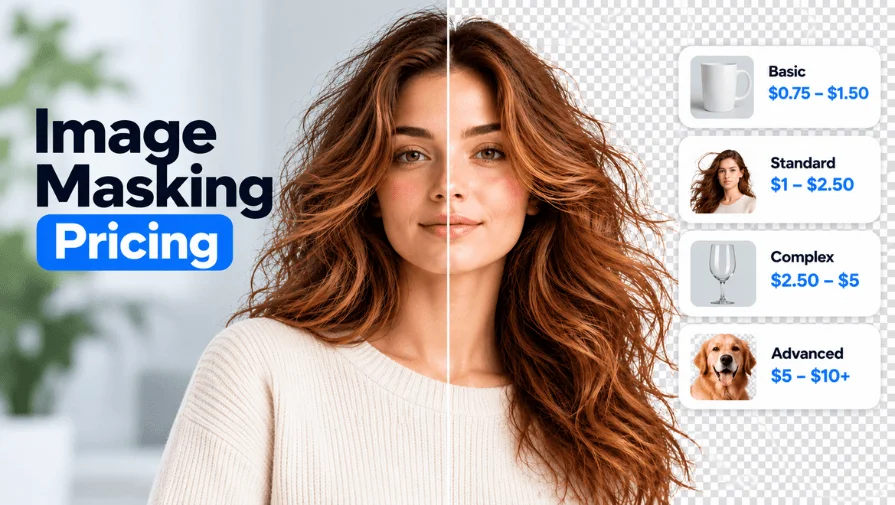
Image masking pricing typically ranges from under $1 to $10+ per image, depending on image complexity, editing requirements, and order volume. Simple images cost less, while hair, fur, glass, and other transparent or intricate details require more advanced masking. Turnaround time, output format, and the choice between manual and AI-powered editing can also affect the final cost.
How Much Does Image Masking Cost in 2027?
Image masking typically costs around $0.75 to $10+ per image, depending on complexity, editing requirements, and order volume.
| Complexity | Cost/Image | Examples |
|---|---|---|
| Basic | $0.75–$1.50 | Simple edges |
| Standard | $1–$2.50 | Hair and simple fur |
| Complex | $2.50–$5 | Glass, veils, dense fur |
| Advanced | $5–$10+ | Multiple subjects |
Note: These are indicative market estimates, not fixed industry rates. Actual prices vary by provider, image complexity, order volume, turnaround time, and deliverables.
What Is Image Masking?
Image masking is a photo editing technique that separates a subject from its background while preserving fine details like hair, fur, glass, and sheer fabrics. Unlike clipping paths, masking can retain soft edges and partial transparency, making it ideal for complex product photos. Professional image masking services help businesses achieve clean, natural-looking results.
Image Masking Pricing by Complexity
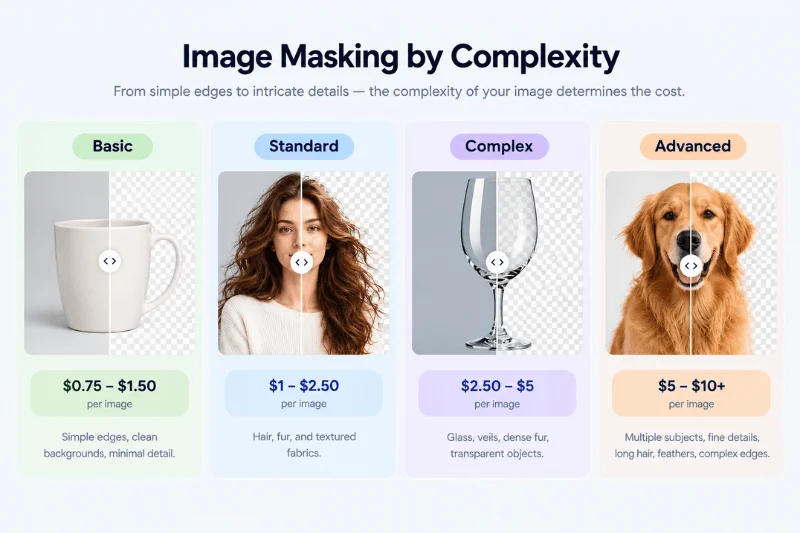
Image masking costs vary depending on the amount of detail an editor needs to preserve. Simple images generally require less work, while intricate edges, fine hair, fur, and transparent materials demand more precise editing. The following price ranges are indicative estimates and may vary by provider.
Basic Image Masking
Estimated cost: $0.75–$1.50 per image
Basic image masking is suitable for images with relatively simple edges and minimal fine detail. Examples include products with soft contours, simple fabric edges, and subjects photographed against clean backgrounds. These images generally require less refinement, making them more affordable to process.
Standard or Medium Image Masking
Estimated cost: $1–$2.50 per image
Standard masking is useful for images with more noticeable edge detail, such as human hair, moderate fur, tassels, and textured fabrics. Editors may need to refine individual strands and remove background color around the subject to achieve a natural result.
Complex Image Masking
Estimated cost: $2.50–$5 per image
Complex masking involves challenging edges or materials that require careful opacity adjustments. Common examples include glassware, veils, dense fur, and other partially transparent objects. Background complexity and overlapping details can increase the editing time and final cost.
Advanced or Ultra-Complex Image Masking
Estimated cost: $5–$10+ per image
Advanced masking is typically needed for intricate lace, fine mesh, long flowing hair, dense feathers, and images containing multiple subjects with overlapping edges. These projects may require extensive manual refinement, color decontamination, and detailed quality checks to preserve realistic edges.
Note: These ranges are illustrative market estimates, not standardized industry rates. Request a quote based on your actual images before budgeting for a large order.
Image Masking Pricing by Technique
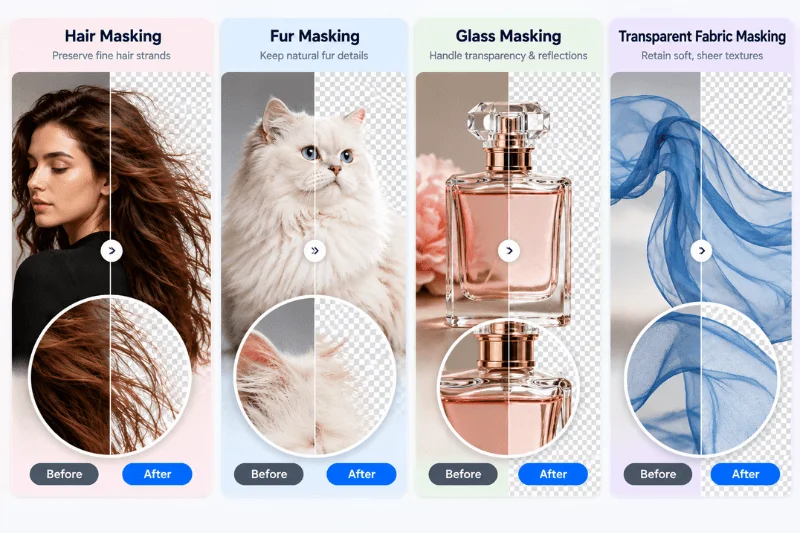
Image masking pricing also depends on the editing technique required to separate a subject from its background. Different techniques handle soft edges, fine details, hair, and transparent materials in different ways. The following estimates are indicative and vary by provider and image complexity.
| Technique | Cost/Image (USD) | Best For |
|---|---|---|
| Layer Masking | $1–$1.50+ | Soft edges |
| Alpha Channel | $1–$2+ | Fine details |
| Hair & Fur | $2–$4+ | Hair, fur, fine strands |
| Transparent Object | $1.50–$3+ | Glass products |
| Translucent Masking | $2–$4+ | Veils, sheer fabrics |
| Refine Edge | $2–$4+ | Delicate contours |
| Color-Based Masking | $1–$3+ | Strong color contrast |
Note: These are indicative estimates, not fixed industry rates. Techniques can overlap within the same project, so providers may price the complete task rather than charge separately for each technique.
Layer Masking
Layer masking uses a non-destructive editing method to hide or reveal parts of an image without permanently deleting pixels. It is useful for controlled background removal and refining soft edges.
Alpha Channel Masking
Alpha channel masking uses grayscale channel information to help isolate subjects with complex tonal or edge details. It can be useful when standard selection methods struggle to separate a subject from its background.
Hair & Fur Masking
Hair and fur masking preserves individual strands and fine edges that would otherwise look cut off. The time required depends on strand density, background contrast, and the level of detail needed.
Transparent and Translucent Masking
These techniques help preserve transparency and subtle opacity variations in glass, veils, sheer fabrics, and similar materials. Reflections, overlapping surfaces, and background color contamination can make these projects more demanding.
Refine Edge Masking
Refine edge techniques improve the boundaries of a selection, particularly around soft, irregular, or detailed contours. They are often used alongside other masking methods rather than as a completely separate workflow.
Color-Based Masking
Color-based masking uses differences in color or tonal information to distinguish a subject from its background. Its effectiveness depends on the contrast between the subject and surrounding areas.
What Factors Affect Image Masking Pricing?
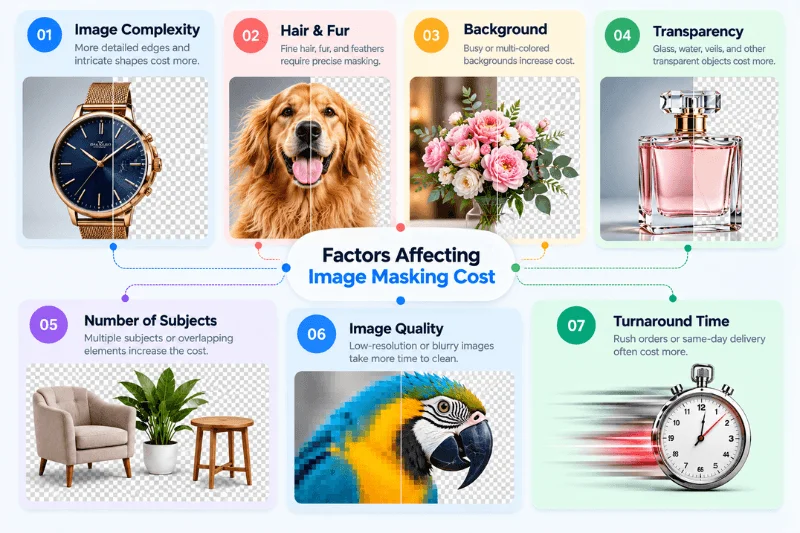
Image masking pricing depends on more than the number of images you need edited. Image complexity, background conditions, required precision, delivery deadlines, and file formats can all affect the final quote. Understanding these factors helps you estimate your budget and compare service providers more accurately.
1. Image Complexity
Simple images with clearly defined edges generally cost less to mask than images with intricate shapes, overlapping details, or irregular contours. The more time an editor needs to isolate the subject and refine its edges, the higher the potential cost.
2. Hair, Fur, and Fine Edges
Human hair, animal fur, feathers, and fine fabric strands require careful edge refinement to preserve natural detail. Images with many flyaway strands or dense fur typically take longer to process than subjects with smooth edges.
3. Background Complexity
A plain, contrasting background makes it easier to separate a subject from its surroundings. Busy backgrounds, similar colors, shadows, and overlapping objects can make masking more difficult and increase editing time.
4. Transparency
Glass, veils, sheer fabrics, and translucent objects often require careful opacity adjustments to preserve realistic transparency. Reflections, highlights, and background color contamination can add further complexity to the editing process.
5. Number of Subjects
An image containing several people, animals, or overlapping objects may require multiple selections and separate mask refinements. More subjects and intersecting edges can increase the time needed to achieve a clean result.
6. Image Quality
High-resolution images can reveal more fine detail, while low-resolution, blurry, or noisy images may make accurate edge detection more difficult. Poor source quality can require additional manual refinement to produce a professional result.
7. Turnaround Time
Standard delivery schedules may be more economical than urgent orders. If you need images within a few hours or require a large batch completed by a tight deadline, a provider may charge a rush fee depending on its workload and service policy.
8. Output Format and Deliverables
The required file format and additional editing work can affect the final price.
- PNG: Suitable for images requiring a transparent background.
- PSD: Useful when editable Photoshop layers and masks are required.
- TIFF: Often preferred for high-quality professional workflows.
- Revisions: Additional correction rounds may cost extra if they fall outside the agreed scope.
- Quality control: Detailed inspection and edge refinement may be included or priced separately.
Before placing an order, confirm which file formats, revisions, and quality checks are included in the quoted price.
Image Masking vs. Clipping Path Pricing
Clipping path is generally more affordable for products with hard edges, while image masking often costs more for images requiring detailed edge refinement, such as hair, fur, and transparent objects.
| Factor | Image Masking | Clipping Path |
|---|---|---|
| Typical Cost | Higher for complex images | Generally lower |
| Editing Time | Longer for fine details | Shorter for simple edges |
| Best For | Hair, fur, glass, veils | Shoes, boxes, furniture |
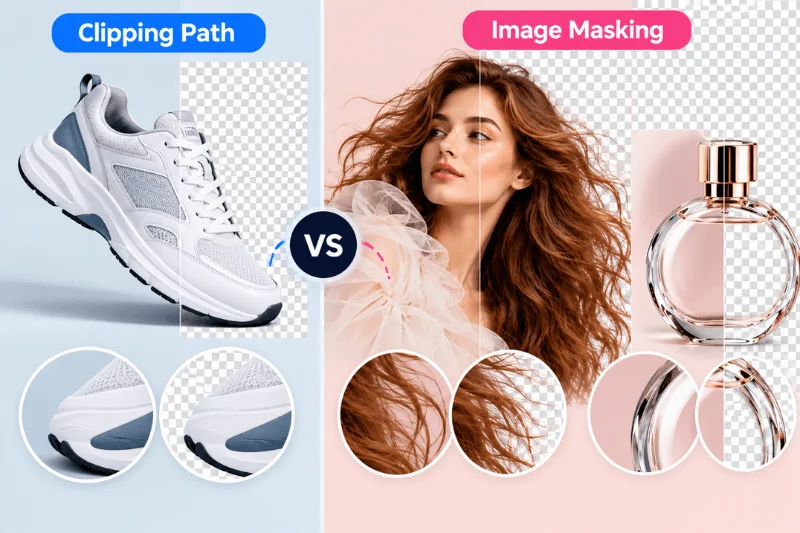
Actual prices depend on image complexity, editing requirements, and order volume. For a detailed comparison, see our clipping path pricing guide.
Manual vs. AI Image Masking Pricing
Image masking costs vary depending on whether you choose manual editing, AI-powered tools, or a combination of both. Manual services typically charge per image, while AI tools may use subscriptions, credits, or pay-per-use pricing.
AI Image Masking
AI masking tools can process images in seconds and may offer free features or paid plans. They are often cost-effective for simple images and large batches, but complex hair, fur, and transparent objects may require manual corrections.
Manual Image Masking
Manual masking involves hands-on editing to refine edges and preserve fine details. Outsourced services generally charge per image, with prices increasing for complex subjects such as hair, fur, glass, and sheer fabrics.
Which Option Offers Better Value?
| Factor | AI Masking | Manual Masking |
|---|---|---|
| Cost | Free or paid plans | Per image |
| Speed | Fast | Slower |
| Fine Details | May need fixes | More control |
| Best For | Simple, bulk images | Complex images |
Tip: AI masking can reduce processing time, while manual editing offers greater control over difficult edges. A hybrid workflow can balance speed, quality, and cost for large product catalogs.
How Much Does Image Masking Cost by Industry?
Image masking costs vary across industries because each type of image has different editing requirements. The final price depends on subject complexity, edge detail, transparency, and the amount of manual refinement needed.
Fashion & Apparel
Fashion images often require precise masking around hair, fur, textured fabrics, and flowing garments. Complex edges and fine details can increase editing costs.
Jewelry
Jewelry masking involves delicate chains, gemstones, intricate settings, and reflective surfaces. Detailed selections may require additional refinement.
Furniture
Furniture with solid edges may need only basic editing, while upholstered pieces, textured fabrics, and intricate designs can require more advanced masking.
Cosmetics & Beauty
Beauty images may contain fine hair, reflective packaging, glass bottles, and transparent product elements. These details can increase the time needed for accurate masking.
eCommerce Product Photography
Large product catalogs often require consistent masking quality across hundreds or thousands of images. Bulk pricing may reduce the per-image cost, depending on image similarity and provider policies.
Photography & Portraits
Portraits and professional photography frequently involve hair, fur, soft edges, and detailed subjects. The complexity of the original image determines how much refinement is necessary.
How Bulk Image Masking Pricing Works
Bulk image masking orders may qualify for lower per-image rates because similar images can be processed more efficiently. The discount depends on image complexity, batch consistency, turnaround time, and the provider’s pricing policy.
- Small orders: Usually charged at the standard per-image rate.
- Medium orders: May qualify for volume discounts.
- Large catalogs: Often benefit from negotiated rates or custom pricing.
Bulk Image Masking Cost Examples
| Order Size | Example Rate/Image | Estimated Total |
|---|---|---|
| 100 images | $1.50 | $150 |
| 500 images | $1.20 | $600 |
Note: These are illustrative calculations, not guaranteed market rates. Actual quotes depend on the provider and project requirements. Before ordering in bulk, request a sample edit and confirm the pricing, turnaround, and revision policy.
What Should Be Included in an Image Masking Quote?
Before choosing an image masking service, check what the quoted price includes. A clear quote helps you compare providers, avoid unexpected charges, and understand the quality of work you can expect.
Use this checklist when reviewing an image masking quote:
- Accurate subject separation with clean, natural edges.
- Fine strands retained where required.
- Unwanted background color around edges corrected when necessary.
- Transparent PNG files, with layered PSD or TIFF available if required.
- Images checked for halos, rough edges, and missing details.
- The number of included revisions and any additional charges.
- Clear file organization and an agreed delivery method.
- A confirmed deadline and any applicable rush fees.
Not every provider includes all these items in its standard price. Confirm the deliverables, revision terms, and additional charges before placing a bulk order.
Cheap Image Masking Quotes: Red Flags to Watch
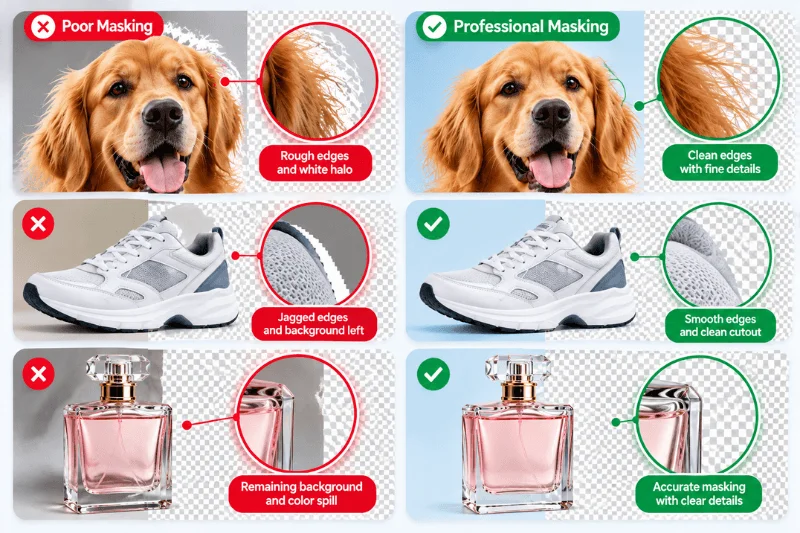
A low image masking quote may seem attractive, but unclear pricing and poor quality can lead to extra costs later. Before choosing a provider, watch for these seven red flags.
1. One Flat Price for Every Image
Images vary in complexity. A simple product and a photo with fine hair, fur, or transparent glass may require very different levels of work. A single flat rate without clear scope can be misleading.
2. No Sample Edit
A provider that cannot show a relevant sample makes it harder to judge edge quality, detail preservation, and consistency. Request a sample before committing to a large order.
3. No Clear Revision Policy
Ask whether corrections are included if the result has rough edges, halos, or missing details. Unclear revision terms may lead to unexpected charges.
4. No Defined Delivery Format
Confirm whether the final files will be delivered as transparent PNGs, layered PSDs, or another required format. The cheapest quote may not include the files your workflow needs.
5. No Turnaround Commitment
A low price is less useful if delivery dates are unclear. Confirm the expected completion time and whether delays or rush requests affect the cost.
6. No Quality-Control Process
Professional masking should preserve fine details and avoid visible halos, jagged edges, and unwanted background colors. Ask how the provider checks finished images before delivery.
7. Unexpected Bulk or Rush Charges
Check whether the quote includes revisions, file preparation, urgent delivery, and other potential fees. Request the full cost in writing before placing a large order.
Tip: Compare providers based on sample quality, included services, delivery terms, and total cost—not just the lowest price per image.
How to Choose the Right Image Masking Service
Before choosing an image masking provider, consider these key factors:
- Sample Quality: Review sample edits for accuracy.
- Hair & Fur: Check fine-detail preservation.
- Transparency: Assess glass and sheer fabric masking.
- Editing Method: Ask about manual refinement.
- Turnaround: Confirm delivery timelines.
- Bulk Discounts: Compare volume-based pricing.
- Revisions: Check the revision policy.
- Output Format: Confirm PNG, PSD, or other requirements.
- Portfolio: Review relevant past work.
- Custom Quote: Request pricing based on your project.
Choose a provider based on quality, reliability, and overall value—not price alone. For further guidance, explore our professional image masking experts and the services they offer.
How to Get an Accurate Image Masking Quote
To get an accurate image masking quote, provide sample images, total image quantity, and details about complex elements such as hair, fur, or glass. Specify your required output format, expected delivery date, and revision needs. These details help the provider assess the workload and estimate the total cost and turnaround time more accurately.
FAQs About Image Masking Pricing
How Much Does Image Masking Cost Per Image?
Image masking may cost under $1 to $10 or more per image, depending on complexity, editing requirements, and order volume. Actual rates vary by provider.
Why Does Complex Image Masking Cost More?
Complex images with hair, fur, glass, or fine transparent details require more precise editing and quality checks, increasing the time and cost.
Is Manual Image Masking Better Than AI Masking?
AI masking is often faster for simple images, while manual editing offers greater control over complex edges. A hybrid workflow can balance speed and quality.
Do Image Masking Services Offer Bulk Discounts?
Many providers offer volume-based pricing, particularly for large orders with similar image requirements. Discounts depend on the provider and project scope.
How Long Does Image Masking Take?
Simple images may be completed quickly, while complex images require more time. Delivery depends on image quantity, complexity, and the provider’s workload.
Get a Custom Image Masking Quote
Need accurate masking for product photos, fashion images, or complex transparent objects? Clipping World can help you explore image masking solutions based on your image requirements and project volume. Share your sample images, quantity, and deadline to request a tailored quote.
